
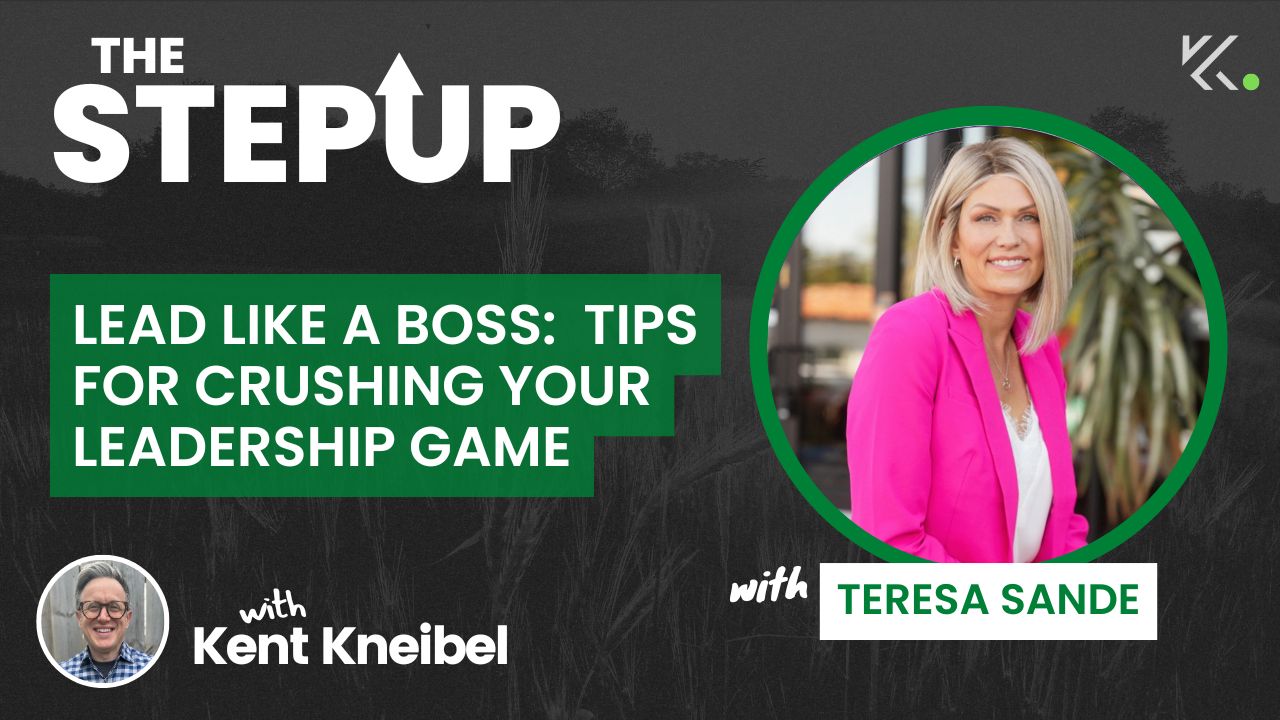
Speaker Teresa Sande is CEO and Founder of Mirror Mirror Strategies, and author of Find Your Fierce: Interrupt Imposter Syndrome and Own your Success. Before publishing her book and launching her firm, she had a successful 25-year career with global corporate experience as an executive at companies like Intel, Capital One, Cargill, and UnitedHealth Group. She has dedicated her career to supporting and building effective leaders and helping top organizations identify, develop, and select their next top executives. Her holistic approach allows people to see themselves and their talents in a clear light and focus on the most important elements of their leadership journey.
From humble beginnings in Downtown Milwaukee, to an early career at Intel, to now owning her own business, Teresa has a unique perspective that resonates with audiences. Whether you are fresh out of school, or have been working in your industry for decades, you’ll leave Teresa’s session with a new nugget that will get you thinking.
As a speaker, Teresa focuses on topics of imposter syndrome, diversity and belonging, owning a success mindset, and transformational leadership. She is a frequent contributor to professional associations, research, and podcasts. Teresa splits her time between Minneapolis, MN and Palm Springs, CA, where she lives with her husband and pets and enjoys finding just about any way to be outside.
On today's episode of The Step UP: Leadership starts with leading yourself, and that’s our jam today. We dive into the fact that you can lead from any chair, whether you're flying solo or managing a massive crew—it's all about self-awareness and knowing your growth edges. Our guest, Teresa Sande, the brains behind Mirror Mirror Strategies, serves up some solid gold insights from her rich background in HR and executive coaching. We chat about the common traps leaders fall into, like thinking they’re special snowflakes or forgetting to celebrate their wins. So, if you're ready to step up your leadership game and unlock your potential, grab your headphones because we’re about to break it down!
Leadership doesn't just happen at the top; it starts with you leading yourself. In our latest chat, we dig into how every one of us can step up our game, whether we're running a team of one or a thousand. Teresa Sandy, our featured guest and founder of Mirror Mirror Strategies, emphasizes the importance of self-awareness and understanding your growth spots. We explore how the most successful leaders are those who recognize their blind spots and actively seek growth. It's all about knowing yourself first because if you can't lead yourself, how can you lead anyone else?
Takeaways:
- Effective leadership kicks off with self-leadership, so knowing yourself is key.
- Regardless of your title, you can lead from anywhere in your organization, even solo.
- Self-awareness is essential for leaders; understanding your growth edges is crucial for success.
- Successful leaders are those who recognize their blind spots and actively seek help when needed.
- Navigating leadership means adapting your approach as your responsibilities evolve over time.
- Compassionate leadership balances driving results while being clear and supportive to your team.
Links for today's show:
- Teresa Sande's Linked In Page
- Teresa's Website
- Find Your Fierce Book
- Kent's Linked In Page
- Promoted Leader Playbook
**Music for this podcast comes from the song Needle & Thread and is provided with permission by Pert' Near Sandstone. Check them out on PertNeaerSandstone.com and on all major streaming platforms.**
*Editing by Fynn Gentle / www.fynngentle.com
• https://www.linkedin.com/in/kentkniebel/
• https://kniebelleadershipadvisory.com/playbook
Teresa (guest)
00:00:04.240 - 00:00:33.360
Leadership starts with leading yourself.
And this is why we say that you can lead at any level, from any chair in the organization, whether you have a team of just yourself or a team of a thousand people globally. Right? And so it really is about those leaders that develop self awareness. Those are the leaders that are most successful.
They're the ones that are are in tune with their growth spots, right? Their blind spots, their growth edges.
Kent (host)
00:00:35.360 - 00:01:48.300
Hi there and welcome to the Step Up Expert Voices for Leadership Growth. I'm your host, Kent Knievel. Every week I talk to experts who focus on helping leaders step up their leadership game.
If you're new to the show, then on whatever platform you're using, I encourage you to subscribe so you never miss an episode. One last thing.
As a leadership development consultant and executive coach, I have a particular interest in supporting, supporting recent internally promoted leaders.
If that's you, or if you support a leader who has been recently promoted, I encourage you to visit my website at Kent Coach Playbook and download a free copy of my 90 day blueprint filled with practical advice for you or the leader you support in hitting the ground running and truly stepping up to their new leadership level. Without further ado, on with the show. Welcome everyone. We are talking about some tips to unlock leadership success today.
And with me for this conversation is Teresa Sandy, CEO and founder of Mirror Mirror Strategies. Teresa is an executive coach, talent and leadership consultant, author and keynote speaker.
I've known her for a short time through Shout Out Sci Train, a company we both have done some work with. Super happy to have you here today, Teresa. Welcome to the podcast.
Teresa (guest)
00:01:48.460 - 00:01:50.620
Thanks so much, Kent. It's great to be here.
Kent (host)
00:01:51.020 - 00:02:05.650
Thank you. Well, you know, I'd love to give each guest the opportunity to tell their own story.
So I would love for you to give us, you know, your career journey, your career arc. What led you eventually into what you're doing today.
Teresa (guest)
00:02:05.970 - 00:04:45.500
Yeah, definitely. So I would say my career was a pretty traditional one from the standpoint of, you know, an HR career as far as that goes.
I spent most of my time in pretty large organizations, Fortune 100 size global. We worked together at the same, not at the same time, but together at Cargill.
That was one of the companies that, that I had the good fortune of working for. But I also worked for intel and Capital One, and then I ended my corporate career after about 26 years at UnitedHealth Group.
So Fortune 4 at that time. So like I said, mostly larger organizations, Complicated, Complex, Matrix Global, et cetera.
And sometimes people say, well, what was the tie right you know, you spent your career in all these different industries. Agriculture, high tech, manufacturing, insurance. Right. Financial services. And, and I always say it's. It's people. Right? People.
And we're all being asked to rise to the occasion and lots of things are changing. We're all living it. And what I see and what I always say is leaders have to lead. They have to be good at leading.
And that's agnostic of industry or what level you're at, you know, in leadership or maybe even if you're an individual contributor. Right. We're still leading ourselves, leading projects. So, yeah, I spent, like I said, about 26 years in, in that corporate setting.
And two things started to coincide about five years ago. One is we were making all kinds of changes at the organization that I was at. And the role that I was being moved into was okay.
I mean, it was, you know, would have been a great role, would have been interesting. But it was also kind of felt like more of the same, you know, kind of wanted a new challenge, wanted to do something different.
And then the other thing that was happening was that I had a book that I had written that was about to come out called Find your Fierce. We're going to talk a little bit about that. And it just felt like such a good intersection.
And I had always wanted to take a bet on myself and go out into the consulting and executive coaching world. And so I did it. So at the end of 2020, I founded Mirror Mirror Strategies and left corporate America after just a great career.
And the last five years have been, you know, just a ton of fun.
So, you know, there's definitely things that I've seen that come up again, like I said, agnostic of industry, agnostic of level that make leaders successful.
So for today, I kind of did a top five things that most successful leaders are focusing on that I thought would be helpful to share with your audience.
Kent (host)
00:04:46.420 - 00:05:44.750
Nice. Yeah. Well, and before we get into that, your variety in your background from your time in HR is super interesting.
Most of the variety that I had in my background was from my early consulting days because like nobody, I started in consulting and then somehow all of my HR experience fell somewhere on the food supply chain in some way, shape or form by just happenstance. So I love all the variety, you know, that you bring to the table because I think that variety, you get to see the different challenges.
Well, the similar challenges, frankly, that people are experiencing at different places. Right. And I think leaders, we all kind of suffer from terminal uniqueness. Right. And it's when you get to kind of hop from place to place.
You get to see. Well, yeah, there's some uniqueness, but there's a lot of commonality, especially when you look at something as maybe esoteric as.
And important as leadership. True.
Teresa (guest)
00:05:44.750 - 00:07:16.260
It's so true. And the trap, I think, that people fall into is. Is believing that I'm special or this circumstance is special, and it's, you know, just extra hard.
It is hard. I mean, that's an acknowledgement, but it's not often that unique.
And if we get into that mindset, we can kind of get stuck into, like a victim mentality instead of a growth mindset, a problem solving, you know, fresh ideas, fresh perspective. And so that's something else I should probably say maybe just a fun fact about me or a little bit insight me in the way that I like to work.
I named my company Mirror Mirror Strategies because I believe that one of the things my superpower is to hold up the mirror with the clients that I'm working with and not to hold up the mirror and say, oh, look at all these things you're doing wrong. A lot of times it's to help them see what they're doing. Right. To help them see what their superpowers are and tap into that. Right.
You know, during COVID especially, so many leaders said, I don't know what to do in these unprecedented times. And the majority of the work that I did with leaders was to actually say, we do know what to do. People need clear communications.
They need connection. They need to know that someone cares. We always needed that.
It just got, you know, the need for it got really elevated and really heightened during COVID but it was helping leaders know that they're naturally creative, resourceful, and whole, which is a coaching principle. Pull. And the more that we can help leaders do that and tap into their greatness, the stronger they are as leaders. So that's big passion.
Kent (host)
00:07:16.740 - 00:07:29.620
Well, and I know you. You thought through five sort of big themes that you've sort of seen in your career in terms of sort of tips for unlocking that greatness. So let's.
Let's dive in. Let's. What's the first one you wanted to talk about?
Teresa (guest)
00:07:29.780 - 00:09:41.220
Yeah, so one of the first ones.
This is maybe relevant especially for leaders that are on that arc of their career, and maybe they're moving into some of their first kind of bigger leadership roles or bigger challenges that maybe they haven't seen before. And this is what I always call it. The assignment has changed. So it's classic, you know, what got you Here won't get you there.
And noticing the fact that the reason you were selected, the reason you stood out, the reason you got noticed and, you know, tapped on the shoulder for this bigger role, is that you had a high capacity for work, you got results, great outputs, and now that you're in these more senior leadership positions, the work of leadership is different. It's not just, you know, how many tasks can I get off my checklist for the day? You know, how hard can I work? How many hours can I put in?
Leaders put a lot of time and energy and hours in, don't get me wrong. But this is about understanding that fundamentally the assignment has changed and now you're required to be strategic, to be thoughtful.
The work of leadership is to pause and say, let me think about that. You know, what is it that I want to respond to this, this difference of responding versus reacting.
And if we want to be a thoughtful, responding leader, then we need time and we need focus on being thoughtful. It's no longer about just, you know, having a huge work capacity and being able to crank out some results.
It's also, you know, I don't know if anyone pulls you aside and says, hey, a big part of your role now is managing all these different stakeholders. Everybody wants a piece of you, right? Everybody has their thing that they need from you.
And if leaders don't know how to manage those stakeholders, you know, that's a big part of success. It's a big part of assignment. It's tempting to get pulled into the squeakiest wheel, right?
Or, you know, as I say, you get picked off one by one because you've got a lot of people that want a lot of your time and, and feel like you are excess accessible. And so it's finding that balance, but just knowing that the assignments changed. So that's.
Kent (host)
00:09:41.220 - 00:10:25.960
Yeah. There's three things I'll comment on from my own observation too, that I think fit in nicely here.
One is, I don't think that we often congratulate someone and tell them the story of.
Because I've seen this and heard this so many times when we're talking about who to place in this role, I hear them say, you know, let's put Teresa in that role.
And, and you hear this story kind of in that back room conversation of like, how quickly Teresa adapted and change changed in the previous assignment they gave her. Right?
And so we don't remind people of that when we promote them too, to say, hey, part of the reason we promoted you is we've seen that agility that you had to adapt and learn the new thing. We need you to do that again. Right. Not necessarily the new role. Right. Or the old.
Teresa (guest)
00:10:26.600 - 00:10:27.800
The old role. Yeah.
Kent (host)
00:10:27.800 - 00:10:28.360
Right. Yeah.
Teresa (guest)
00:10:28.360 - 00:11:06.260
It's so true. And, you know, I mean, this could be a whole nother podcast. Right. But, but job descriptions are written on a list of tasks.
They're not written about a list of outcomes. You know, and, and, but, but really, that's what we' evaluated on, especially at leadership levels.
They're not necessarily looking at what you did on a Tuesday, on a Wednesday, on a Thursday. They're looking at the macro. How well did you lead? How well did you create followership? How well did you inspire and influence?
And, you know, there's maybe a bullet or two on the job description about that in leadership, but really the yardstick people are using is, you know, while we're leading and, and, you know, behavioral things.
Kent (host)
00:11:06.660 - 00:12:03.080
Yeah.
So there's such a mindset shift there, which is the second thing I was going to say, which is kind of recalibrating from thinking about your own productivity to what is the team producing. Right. It's not about.
I don't see senior leaders patting junior leaders on the shoulder for the things that they personally drove over the finish line necessarily. Right. And it's more about what is that whole team producing. You said one other, one other thing, which was about peers. Right.
And I see a lot of leaders neglect that with great intention early on. Right. It's like, let me hit. I've been promoted because I, you know, showed great skill. I know the people, I know the products or services.
Let me hit the ground running and just try to keep the wheels on this bus. And so they focus on their team. They focus on, you know, those individuals, what they need to do and learn.
And it's like, I'll get to the peers later.
Teresa (guest)
00:12:03.240 - 00:12:03.720
Yeah.
Kent (host)
00:12:03.880 - 00:12:14.720
And it, it's you then, you know, you're. You're sitting at month three or month six, somewhere in that range. You're trying to get an idea accepted. And these people are like, we.
We don't even know you yet. Right.
Teresa (guest)
00:12:14.720 - 00:12:59.770
Like, yeah, it's so true. Right. And that's, that's why I mentioned this kind of stakeholdering and just understanding that that is also the work. Who are your stakeholders?
Who are you going to, you know, work with?
And it actually kind of brings me, I guess, to my second of the top five, which is, you know, are you building your team and leveraging your resources? So as leaders, it's not just about sheer, you know, Herculean strength and getting things done.
It is saying, I can't do everything anymore and actually you shouldn't. In my coaching, I so often have leaders say to me, oh, you know, I just, I can't do that. I don't have time.
And we'll talk about the fact that it's not can't. It's not can or can't, it's should you even be doing that work? Right.
Kent (host)
00:12:59.770 - 00:13:00.260
I love that.
Teresa (guest)
00:13:00.650 - 00:14:36.340
You know, it's almost like if it's not about saying, I'm a diva and I'm not going to do a task that's below me, but it understanding that you are a corporate company resource that is paid very differently from some other resources and there are certain things that other resources can and should pick up from your plate and there are things that only you can do. Now as the leader, you can't outsource certain things.
So getting those, if you want to call it a task list correct in your mind and then leveraging the people around you to make sure that you're getting work done.
And you know, my background from a corporate perspective in HR is talent management and succession planning and having a really strong people strategy.
And, you know, if we're not delegating tasks as leaders, if we're not teaching people and helping them get the experiences they need, you're never going to go anywhere. You're not going to move on because you have gaps behind you, right. In your succession plan. I see that all the time.
Leaders that are ready to go to the next thing and the organization says, we can't let you go. Right? There's nobody that can fill your spot, that can feel good for a moment, but that is also not great.
The other thing I tell people is if you're a leader, listen, if you feel like you're the smartest person in the room or if you're noticing that you are the person in the room that is the only one that has the answer, an alarm bell should be going off in their mind, right? Because you need to surround yourself with people that are smarter than you, that have their areas of expertise. You're not the smartest person.
You shouldn't be.
Kent (host)
00:14:36.980 - 00:15:34.560
That's a really good point. And it, and this challenge in particular, I feel, is level agnostic.
I feel like every level of leader that I've worked with has this very, the same, very, very same challenge, right.
Of having to regularly scan what is on my plate and asking the tough question of is this a thing that I uniquely need to do where I uniquely Add value. And what am I hanging on to that somebody else should absolutely do? And then I. How do you then break some of the big things apart as well? Right?
Because you could, you can kind of make a mountain out of a molehill at times, too, and say, well, that has to be me. And it's like A to Z has to be you. Can you break that up some? So I, that's, It's an interesting challenge that if you can.
I, I want to say if you can figure it out early, yeah, you're going to be. You're going to have it figured out. But no, you have to re. Figure that out. Every sort of level you, you go.
Teresa (guest)
00:15:34.640 - 00:17:31.789
You really do.
And it's, it's funny, I swear, for anyone listening, we did not practice this or prep like, you know, tip number three or, you know, the third of the top five list, which is, as a leader, you need to get really focused and expect results, but don't get hung up on the process or how it's done. Right. Because you probably did get promoted because of how good you were at doing something.
You know, a certain job, you became an expert in something. But now we have to let other people sort of run the process and do the tasks.
But as a leader, it's tremendously valuable to talk the field and to say, this is the result we're trying to get. This is the outcome we need.
Like you said, you're accountable for A through Z, but I'm not accountable for, you know, every little task that gets done and exactly how it gets done. That's actually how we're building the strength of our teams around us.
So often when leaders will come to me and say, you know, I'm struggling, I'm, I'm, I'm burning out, or, gosh, I don't notice my team elevating, I often ask them, you know, how are you setting expectations? How are you saying what the need is, what the result is? Are you clear on that? And are you consistently showing up that way?
Because it's very tempting, right? When push comes to shove, it's like, I gave this to Kent. I asked him to do this thing. I wanted it by Thursday. It's Wednesday.
I'm nervous it's not coming. You know what? I'm just going to log on. I'm going to do it myself.
And you're inconsistent in terms of when you're diving in the weeds and when you're pulling up and looking out on the horizon, or as they sometimes say, you know, when are you on the balcony. When are you on the dance floor? And leader.
As a leader, we want to be up on the balcony as much as possible, because that's our job, is to scan, to think about the whole system, to think about the. The way all the parts work. Right. And the total outcome, not each individual task or outcome.
Kent (host)
00:17:32.589 - 00:17:40.469
Yeah, yeah, yeah. My. My fun analogy I'll throw out there is, you know, you can't conduct the orchestra, you know, while you're sitting in one of the chairs. Right.
Teresa (guest)
00:17:40.469 - 00:17:41.149
Oh, true.
Kent (host)
00:17:41.629 - 00:17:48.380
Yeah. I love that. Yeah. And we. We didn't rehearse this. This is fun because it's like, oh, fun. We're dealing with the same. We're seeing the same things.
Teresa (guest)
00:17:48.380 - 00:18:01.660
Well, it's your point, right? It's to the earlier point that this is agnostic of industry or level or, you know, these different nuances.
These are like the evergreen challenges of leadership and the things that make leaders successful.
Kent (host)
00:18:02.140 - 00:18:05.500
Yeah, I think we're on the number four. Are we already on number four?
Teresa (guest)
00:18:05.580 - 00:20:04.690
Yeah, yeah, we are on to number four. So number four, I would say, is to incorporate compassion. So I often have leaders, and you mentioned peers as a.
As a interesting nuance that happens, especially as people ascend leadership ranks is, you know, maybe somebody that you used to work for, it becomes your peer, and maybe they work for you one day. Right. And that changes a whole dynamic. And I often have leaders say to me, you know, well, I don't.
I want to be understanding and flexible and compassionate. You know, I don't want to be this, like, hard driver. I want to maintain my relationships. And there is a balance.
It's not always an easy one to strike, to have compassion while driving for results. Because as a leader, that is your role, right. Is. Is to make sure that you are getting results, and you're getting results through others.
And so making sure that you're in balance there, that you're not overly. I'm gonna. I'm. I'm not gonna be clear. I'm gonna dance around the hard topic. I'm not gonna, you know, give feedback.
I don't want this person to get upset with me. That's.
One end of the spectrum is just not caring and, you know, sort of blazing a trail, and you've got, you know, a bunch of carnage behind you, and you're not even turning around to see if anyone's following you. So it is finding that balance of how do I make myself accessible?
Demonstrate compassion, literally have compassion, and be very clear and consistent in the results that are needed. I mean, that's probably the most kind thing you can do as a leader is to be clear and to be consistent. So, again, that's.
That's another one of those things. But knowing that it takes effort to balance that. Right. You have to be really thoughtful and purposeful about your leadership brand.
You know, if you want to be compassionate, and I hope leaders do, but you also want to be clear and drive results, then you have to be really purposeful in striking that balance if you want to be successful.
Kent (host)
00:20:04.850 - 00:20:28.050
Yeah. Yeah.
You're making me think of both Brene Brown Clear as kind, as well as Kim Scott, who wrote Radical Candor because she talked a little bit about this too. Right. And I've seen it firsthand as a leader myself, as well as with other leaders.
Pulling your punches and not giving the hard message or feedback that's needed, you're not actually being that nice.
Teresa (guest)
00:20:28.050 - 00:20:28.410
No.
Kent (host)
00:20:28.410 - 00:21:10.990
Right. Like, if you really think about it. And I think the one thing that.
I don't know if she said it exactly this way, but the one thing Kim Scott had said, you know, essentially in the story she tells is like, you might be the first person to ever tell someone this feedback, and what. What might you actually be unlocking for them? What favor might you be doing for them by drilling in.
But to your point, you have to have that compassion. Right. Which is also. Whenever I've taught feedback to folks, you should start with why you care and why you care enough to be giving this feedback.
And if you don't care, that might be another conversation you need to have probably with yourself first in terms of determining what the conversation you really need to have with your team.
Teresa (guest)
00:21:11.680 - 00:22:29.060
I mean, it's. It's the only thing that makes the cliche saying feedback is a gift. Really, a gift is if you thought about the person that you're giving it to.
It shouldn't be, oh, Kent made me really mad. I'm gonna give him this feedback. It's like, I want Ken to be successful. Was I upset in the situation? Maybe.
But I'm watching Kent do some things that is maybe not gonna set him up for success. So if I care enough about Kent, then I'm gonna give this feedback because I want to see him thrive and be successful. Right. Not keep.
I just don't believe, fundamentally, people show up at work and say, how can I be ineffective today? Right? I mean, we all go to work and say, I want to. I want to knock it out of the park. I want to be successful.
And so, you know, if we can hold that mindset, I think that then you know, you're able to be compassionate and being clear and consistent.
When, when our employees or our team have an inconsistent experience with us, we're ineffective because they're like, oh, which version of Teresa am I going to get today? It's like that recipe for disaster, right?
I mean, so you want to make sure that you're compassionate and, you know, a human being, but that you're very clear, you know, on the results and, and that you are invested in helping someone get those results. Right. And them being successful.
Kent (host)
00:22:29.460 - 00:22:30.420
Yeah. Yeah.
Teresa (guest)
00:22:31.380 - 00:22:32.180
Okay. All right.
Kent (host)
00:22:32.340 - 00:22:33.220
On the number five.
Teresa (guest)
00:22:33.940 - 00:25:58.570
Okay. So number five is that leadership starts with leading yourself.
And this is why that, you know, you can lead at any level from any chair in the organization, whether you have, you know, a team of just yourself or a team of a thousand people globally. Right. And so it really is about those leaders that develop self awareness and they address their internal barriers.
Those are the leaders that are most successful. They're the ones that are in tune with their growth spots. Right? They're blind spots. They're growth edges.
They're the ones that are humble enough to say, I need some help. I need some support. I don't know how to do this yet. I'm, I'm learning. And this, this kind of comes full circle to why I wrote the book that I wrote.
So I wrote a book, it's called Find you'd Fierce. And it's all about combating imposter syndrome.
And the reason that I was so passionate about writing this book is that I had been coaching leaders internally for years.
And as they were getting into these bigger, broader roles, you know, you build up this trust and in those quiet moments, they would sort of confide in you. Like Teresa, I honestly think they might have made a mistake. I don't think I'm the right person for this role.
I think people are going to find out, like, I don't know everything that I'm doing. You know, I'm kind of faking it till I make it. And it's really giving me a lot of anxiety.
And what I was so surprised by was these were the high flyers, these were the top talents. They were the people that absolutely should be in these roles. And I started getting curious. Actually, this was like probably 12 or 13 years ago.
I started doing research like, can. Can really successful people suddenly forget everything they've known? Can. You know, like I was.
It was just felt like such a phenomenon of what was happening. Like these were such talented people, but they were really second guessing themselves.
And the ironic thing is they were starting to sabotage themselves. So they would, you know, to combat these feelings that they had, they would start overworking and overanalyzing and micromanaging their teams.
And, you know, and then lo and behold, the organization would question, like, wait a minute, maybe we made a mistake. You know, this person was fantastic last year, and now we put them into this bigger role and they're exhibiting some strange behaviors. Right?
And I found that there was this term. I mean, we're very familiar with the term imposter syndrome now, but 10, 15 years ago, it was really not that common.
We weren't talking about it a lot. And as theory, imposter syndrome has only been around since like the late 70s.
And so as it gained more awareness and more, you know, acceptance that it's a real thing, it's not just something that like weak people feel, I would share this with the people I was coaching. You know, I'd say, well, there's this thing, it's called imposter syndrome. And I'm wondering, you know, I'm just curious, does any of this resonate?
And I would share with people, you know, how it shows up and what it looks like. And there'd usually be this long pause, and then they'd say, oh, my gosh, okay, I'm not the only one that feels this way.
I didn't want to tell anyone, like, okay, it's normal to feel this way. And then immediately they would say, what do I do about it, Teresa? And that's where it got dicey. Right?
You know, because 10, 15 years ago, there wasn't much out there. The advice was, fake it till you make it.
Kent (host)
00:25:58.890 - 00:25:59.290
Right?
Teresa (guest)
00:25:59.290 - 00:26:35.320
That is horrible advice from imposter syndrome standpoint.
I mean, you can fake it till you make it and get through a meeting, you know, maybe get through a quick presentation, but if you really want to fight imposter syndrome, you have to do the work on yourself, right? The. So that's point number five.
Whether it's imposter syndrome or just developing your own self awareness of any internal limiting beliefs that you might have is to do the work on yourself and make sure that you're setting yourself up for success and you're not just sort of fumbling through it. Right. And just making it up as you go.
Kent (host)
00:26:35.960 - 00:27:26.180
Yeah.
One thing I'm very curious about is, is part of it, because I have just had Kevin Wieldy on, and we were talking, we were talking about coachability, right? You know, the higher you go on an organization, the lonelier it gets.
And that the typical Approach is, you know, for leaders, if you're not sort of given this encouragement or you don't have the self awareness or the drive, you know, for learning, the tendency is to stop seeking feedback. Right. And to, you know, stop, I should know. I should, I should have it together.
Which I imagine is a big part of, or at least a part of imposter syndrome. But yeah, I'd love to. You know, what are some of the other things people can be on the lookout for or do to combat this?
Teresa (guest)
00:27:26.340 - 00:30:50.290
Yeah, so just to kind of help break this down a little bit in the book, the way I arrange the content in the book is something I call a framework, and it has an acronym in the middle. It's F R A I M. So AIM is awareness, interruption and momentum. So the first thing is awareness.
It's self awareness, but it's also awareness of what is imposter syndrome. Why do we experience it? How does it show up for us? Because it can be very subtle. It doesn't show up with a big banner.
That's like imposter syndrome, right.
It shows up in these more sneaky ways, like I get promoted and then all of a sudden I believe that I don't belong here, or I get a bigger team and I start diving down in the weeds and overanalyzing their work results, perfectionism tendencies start coming out. So it's the awareness piece is just knowing what's happening and noticing that it's happening. Once you know something, you can't unknow it.
And so once once you see something, you can't unsee it. And that's a big part of this journey with imposter syndrome is just tapping into and saying, oh, okay, this is happening. It's normal.
This is what's triggering me. And now I can move into some kind of action and say, what do I want to do about it? And then it's sort of two prongs from there.
Interruption are quick things that you can do in the moment to kind of flip the script, right? So if you notice yourself, the little voice, a little devil on your shoulder saying, you know, they're gonna figure you out.
They're gonna figure out that you're not that smart and you don't know what you're talking about. And so then you start noticing that you don't speak up in meetings or you're over preparing for things, right? You're overanalyzing and overthinking.
We have to just like stopping the flow of water, we have to interrupt those thoughts. So in the moment if you hear a voice in your head that says, oh, gosh, I'm just really lucky, you know, I got here.
I don't even know how I landed in this role. It's like, pause. That would be a negative belief or a limiting belief. Instead, reframe that thought and say, well, what else might be possible?
Maybe I was promoted because I have a lot that I can contribute, or maybe I deserve to be here. It shows up in other ways too, though. So, like, one common way that I'll see it is you get a compliment on a presentation.
Ken, nice job on that presentation. Really like the way you framed that up and you go, oh, no, no, no, it was. It was nothing. And also, I kind of blew it. And. Right.
You know, we, like, do this negative self talk. Notice that you're doing it, pause for a moment, say, thank you, I appreciate that. Right.
And then it's like in your brain, you actually have to re flip the script and say, well, what else is. Maybe it was just easy for you because it's your superpower. I mean, when someone compliments you and says, great job, you know, that was masterful.
Why do we minimize it? Why do we give our power away? It might be easy for you. Chances are it wasn't. Chances are you worked really hard.
But even if it did come natural to you, it's a gift. It's something that is valuable and so owning that. So first you have to notice that you're minimizing it.
Second, you have to reframe and kind of flip the script. Those are quick in the moment things.
My favorite interruption question, when we are on something that I call the rumination wheel of awfulization, which is.
Kent (host)
00:30:51.010 - 00:30:51.650
I like that.
Teresa (guest)
00:30:51.650 - 00:32:37.670
Yeah, this is. I've done it myself.
You know, you give a presentation, you realize you went long, you talk too fast, maybe you missed a couple of your data points, you stumbled on your words, nothing broke, nothing bad happened. But you know that it wasn't exactly how you wanted it. And you start ruminating and playing it over in your head, what would you do differently?
And, oh, I wish this would have happened, or I wish that would have happened. And our brain is not kind to us in that moment, and we actually start thinking, oh, everybody noticed. Now they think, I'm an idiot.
You know, I'm going to get removed out of this job. I mean, the thoughts that can pop into our head, it is truly an awfulization of a situation. We always. People laugh when I say that, but it's.
It's so true. Right? If we Leave our brain on its own. I mean, it is not always kind.
And so you have to stop it and say, okay, I'm getting off this wheel of awfulization. I'm going to stop on this. My favorite question to interrupt the thought is to say, what if that's not true?
What if it's not true that everyone noticed? What's another possibility? Maybe no one noticed. Maybe they were all into their own thoughts. Right. You know, maybe so.
So the point isn't to be Pollyanna or ignore our areas for improvement.
It is to say, if you're on one end of the spectrum and you're in the spiral of awfulizing, it's to force yourself all the way to the other end of the spectrum for just a moment. And what's going to happen is you're going to end up somewhere in the middle, which is much more accurate.
It's a much clearer picture of yourself, and we can actually do something with that. Right. So that's a big part of it. In terms of momentum. I mean, this would probably be another podcast if you ever wanted to talk about.
Kent (host)
00:32:37.670 - 00:32:41.670
I was just. I was just saying we're going to have to. We're going to have to dedicate a whole other podcast.
Teresa (guest)
00:32:41.830 - 00:34:11.730
Exactly. But, you know, the Momentum section is the deeper work.
This is where you're doing things like really understanding your strengths, understanding your value, knowing what your brand is as a leader and what you aspire to be, and then tuning into it and structuring your time, structuring your mindset around that model and achieving the success. And that's setting yourself up with things like a personal board of directors. Right.
Mentors, sponsors, which is the difference between mentors, sponsors. Right. And so just. Just sort of surrounding yourself with. With the people and the resources that will set yourself up for success.
So the Mom Momentum section of the book, I had someone say, I was reading the book. It's a really fast read. It was, you know, really fun. There's 40 different exercises you can do if you want to try different things.
And they got to the Momentum section, and they said, I thought I was just gonna rock it right through. And they said, I just completely slowed down. Like, each of the exercises was really deep.
And it's taking me a long time to get through section three of the book. And I'm like, that's how we build momentum. Right? How we build it. We do the deep work work because it's a.
It's an investment in yourself that you need to do, not just for Imposter Syndrome, but For so many other things, which, you know, on point number five of the most successful leaders, they're doing the deep work on themselves. Right. And they're. They're seeing. That is the part of work of leadership is to work on ourselves, to be our best version of ourselves.
Kent (host)
00:34:12.130 - 00:34:12.690
So that's.
Teresa (guest)
00:34:13.010 - 00:34:15.010
That's kind of my. My top five.
Kent (host)
00:34:15.490 - 00:34:16.210
I like it.
Teresa (guest)
00:34:16.610 - 00:34:17.900
Most successful leaders do.
Kent (host)
00:34:18.609 - 00:35:21.280
That's great. And thanks for diving into imposter syndrome a little bit.
I think I kind of forced us sort of neatly into the next section with that one, which is our advice section of the podcast. I had a thought before I went there, though, which is, I think, another thing, especially.
I don't know how deeply this ties into imposter syndrome, but I do find that leaders and teams don't spend nearly as much time celebrating successes and things that went well and an inordinate amount of time dwelling on what. What didn't go well. Like the.
The amount of time, like wins don't buoy people nearly as long or for nearly as much time as, like, something that didn't go as well will. Will take them down a notch. Right. For a longer amount of time. So that's another thing I know I.
I try to be better at personally is, you know, hanging on to being intentional about celebrating things that went well.
Teresa (guest)
00:35:21.680 - 00:35:22.160
Yeah.
Kent (host)
00:35:22.320 - 00:35:22.840
Yeah.
Teresa (guest)
00:35:22.840 - 00:36:00.240
It's so true. And it. It is the. That's the tapping into our superpowers. Right. And. And actually pausing and noticing, which ties into one of the points that I made.
Right. Is. Is be super aware and notice that. That we're actually good at a lot of things.
Our teams are good at things, and it's okay to celebrate other people who are good at things that you're not good at. And that doesn't make you less than. It means you're a strong team. Right.
You can complement each other, but we have to be really aware and notice if things are triggering us or notice if, you know, it's forcing us to show up a certain way. So. Yeah, yeah, that's. It's really key. Yeah.
Kent (host)
00:36:00.480 - 00:36:16.350
Well, so as if you haven't given us all kinds of advice already, let me dive into our advice section, which is, first, some advice for leaders out there who are listening. Something, you know, what can they take from this and put into practice right away?
Teresa (guest)
00:36:16.510 - 00:37:31.870
Yeah. I think the. This principle of nothing changes if nothing changes.
And this isn't to say, like, if you're listening and you're a leader, everything needs to change, but it is saying, if we want different outcomes, we have to do different things. And a lot of times, you know, we say we want a different outcome, but we're not actually prepared to change.
And the thing about leadership is no one can do it for you. It's not, you know, you can't outsource it to someone. Your teams will know, your organization will know, right? They'll know if you're phoning it in.
There just isn't. There isn't a way to fake leadership. And so I think it really is about giving yourself the gift of time.
One exercise that I do with, with a lot of my coaching clients is we do this figurative clearing the calendar. Because time is always the excuse, right? Like we're busy, we don't have time.
So what we do is we literally look at your calendar and we go, okay, let's just pretend it was all in a bucket. We're going to dump it out on the table.
Now I want you to look at things and say, what are the absolute non negotiables that are core and primary to your role? You know, like the. Is it covey that does the big rocks, medium rocks, and the sand? You know, when you feel.
Kent (host)
00:37:32.030 - 00:37:32.750
I don't remember.
Teresa (guest)
00:37:32.830 - 00:38:45.090
Yeah, it's. It's like highly effective. Habits of highly effective. Okay, but it's a similar concept, but we do it with the calendar.
And I say pretend that, you know, don't actually go cancel all your meetings, but just pretend for a moment you're going to clear your calendar. And now I want you to think about your role, the impact you need to have your stakeholders, right? Get really clear on all of those things.
What do you need to go do? And then the challenge is something has to earn its spot back on your calendar.
So if, if there's meetings that you're being invited to that you're like, I don't even know why I'm there. I don't. I don't know what role I need to play. Sounds like it hasn't earned a spot on the calendar yet.
Now, if it's the CEO asking you to come to a meeting, just go, don't question it. But, you know, I mean, it's. As a leader, we have to be diligent with that. It's our time. And that is the most precious commodity that we have.
Because if we want more time to be thoughtful, to think and reflect and be purposeful, then you gotta make time. Because we don't get any more minutes in the day. No matter how, no matter what title you have, we all get the same 24 hours in a Day.
So it's giving yourself the gift of time because nothing will change if nothing changes.
Kent (host)
00:38:45.330 - 00:38:46.050
I love that.
Teresa (guest)
00:38:46.130 - 00:39:18.260
The other thing I would say for leaders, and this is not a sales pitch for me per se, it's to say if you can and your organization will support you, I highly recommend getting a coach. Yeah, I, I'm a coach. I have a coach. The reason is because I'm too close to my own stuff. We all are too close to our own stuff.
So find someone that you click with that will help you with accountability and that'll help you hold up the mirror and see where your strengths are and see where you have opportunities. I mean, that's one of the biggest things you could do for yourself.
Kent (host)
00:39:19.130 - 00:39:58.070
Yeah. I also find that coaching is one of very few things that. Where leaders give themselves permission to pause the daily grind and attend to themselves.
Right. There's very few things where they are like, oh, I like, this is not work. I'm going to stop and think I'm giving myself permission to do so.
So just looking at the time, I want to move us to. So another big part of our, my listener base, our listener base here is I just say supporters of leaders. Right.
So that's HR talent, lead leadership development, heads of hr, maybe even senior leaders. Right. But the focus is on folks who are supporting other leaders. So what's your advice for them?
Teresa (guest)
00:39:58.230 - 00:42:02.330
Yeah, I mean, I would say it's probably two things, right? One, play the role that you're there to play. And what I mean by that is let's take HR leaders. The work of leadership can't be outsourced to hr.
So HR can support leaders, they can be a sounding board, they can be a strategic partner, but they can't do it for the leader.
And I think that's a trap that a lot of HR leaders can find themselves in or kind of, you know, fall into a little bit like, I want to help and I mean, I'll just pick on myself for a moment. When I was in corporate, I had this thing called helium hand. If someone was struggling, I would raise my hand. I can help. I can help. I can help, help.
And you know, it's like a strength overused.
I always wanted to be helpful, but actually staying in my lane and being a partner and bringing my expertise but not crossing the line of doing it for them. That's the key, right?
For the most successful support, quote, unquote, support people who are playing a part of leaders is allow them to do their role and you play your role. So I think that's a really, really important part of it.
The other thing that I would just say is enabling leaders is an interesting balance because we want to remove any roadblocks that are in the way. Like a system is, you know, cumbersome or a process doesn't work.
Like let's fix that and let's educate leaders and help them to be more successful in using the systems and the tools, but again, stopping short of doing it for them. So one of the principles that I tend to aspire to is that this type of work should be leader led, but HR enabled.
So whether it's leadership development, whether it's, you know, your talent strategy, it doesn't matter if you're the chro and you sort of own the people strategy. You might own the strategy, but you don't own the people.
And so how do we make sure that we're setting ourselves up to be that strong partner and allowing it to be leader led? Right. And.
Kent (host)
00:42:04.470 - 00:42:28.890
Interestingly, I think there's a parallel to something we were talking about earlier here. Right. Which is what is the value that you uniquely add? Right. So we're saying that to leaders.
Maybe we need to say that to, you know, ourselves, those of us who are, you know, in hr.
Is, is this something where I'm uniquely adding value that the leader can't do or am I attempting to make myself indispensable through just ticking more boxes too?
Teresa (guest)
00:42:29.440 - 00:42:30.080
Absolutely.
Kent (host)
00:42:30.320 - 00:42:48.160
I think it's the same, same trap as a leader's falling into. Right. With, with their own, their own people. Awesome.
Well, let me land this plane here, which is, I think the third piece is how to, you know, how can people get a hold of you if they want more Teresa Sandy in their lives? Where can they find you? Where can they find your book?
Teresa (guest)
00:42:48.480 - 00:43:34.960
Yeah. Yeah. Thank you. So you can go to my website, teresasandy.com and that's probably your first stop.
You can find all kinds of things there, including, you know, more about consulting services, coaching services. You can order the book there. My book is also on Amazon, it's on Audible.
You know, there's, there's all kinds of different things that you can, you can find the resource on all of the major book retailers and then, yeah, LinkedIn is probably my jam right now. I'm, I'm kind of out on LinkedIn and I share a lot of insights there. I post several times a week.
So if some of the stuff that we talked about here today was useful, I try to break it down into little bite sized nuggets, you know, throughout, throughout the week. And so you can always follow me there. Yeah. Love to grow my. Grow my network that way.
Kent (host)
00:43:35.520 - 00:43:52.090
Great. Well, I'll make sure I put all those links in the show notes. That brings us to the end of our show today. Teresa, thank you for being here.
This was a very fun conversation, and I'm glad I got to know you a little bit better today as well. So thank you so much, so much. I really appreciate you coming on the show.
Teresa (guest)
00:43:52.090 - 00:43:53.850
Thanks. It was great to be here, Kent.
Kent (host)
00:43:53.850 - 00:44:17.940
All right, that brings us to the end of our episode. Thanks for listening.
I'd encourage you to head on over to my website, Kent Coach, and start a conversation with me there or check out my promotion playbook at Kent Coates Playbook. Before you go on with your day, I ask that you please take a moment to leave a rating and a review wherever you listen to podcasts. Five stars.
That helps put this podcast in front of more eyes and years. Until next time, take it easy.


