
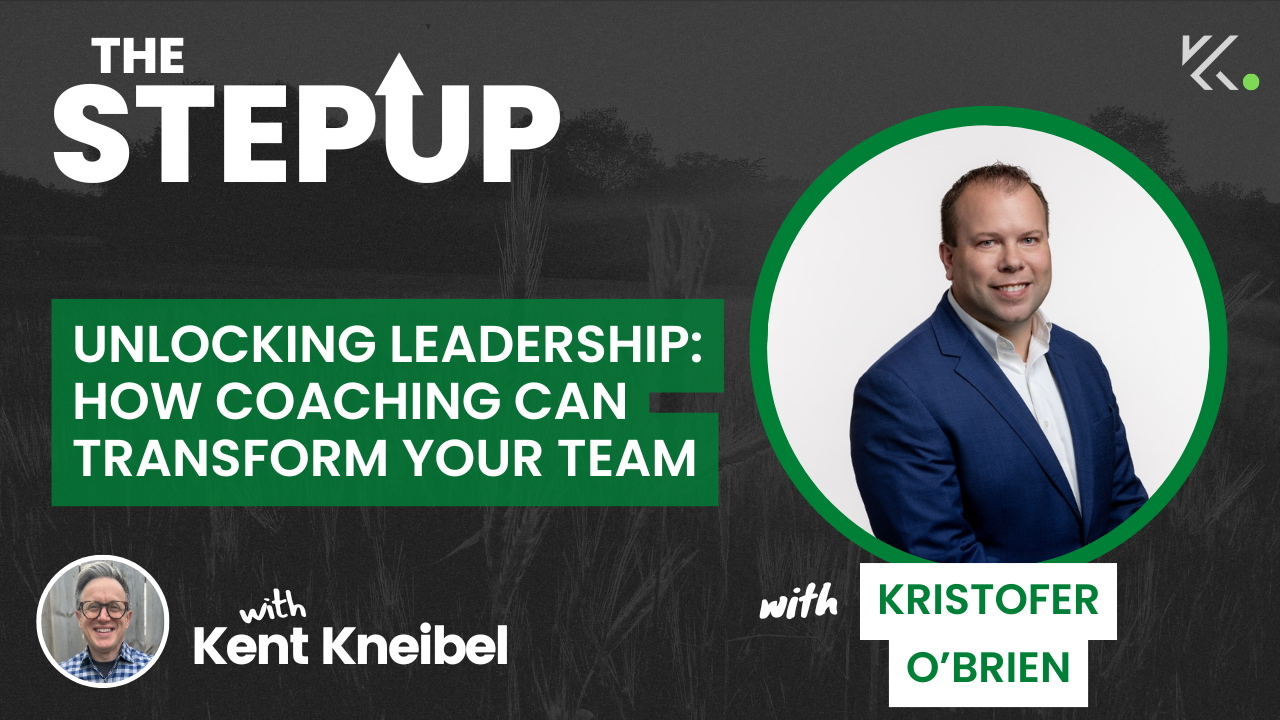
Guest Bio:
As the Director of Global Talent Management, Kristofer O’Brien is an executive coach, management consultant, talent partner, sits on the Enterprise Learning Council and seasoned team leader with over 20 years of experience. He leverages his expertise in creating environments that foster superior performance to empower leaders to believe that everyone can make a difference in both their professional and personal lives.
Kristofer oversees the deployment of leadership development programs, leads change management efforts, and promotes a culture of innovation. He is committed to helping his clients and partners explore opportunities for greater success and accountability in achieving their goals.
With a background in consulting, medical technology, healthcare, hospitality, and retail services, Kristofer brings a wealth of leadership knowledge and coaching experience to his clients. As a tenured leader in Global Talent Management and Development, he is certified in numerous learning platforms and has delivered professional development programs worldwide. Kristofer is well-equipped to guide his clients and partners into the next decade of growth and opportunity in an uncertain world.
Kristofer's extensive experience with companies ranging from Fortune 50 giants to startups and nonprofits enables him to tailor his coaching to clients at any career stage. His clientele includes individuals at all organizational levels, from C-Suite executives to new managers. Over his career, he has successfully coached hundreds of leaders from a wide array of disciplines within organizations.
Show Notes:
Leaders, listen up! Today, we’re diving into the crucial art of coaching your team rather than just managing them. It’s all about tapping into the hearts and minds of your employees, encouraging them to take chances and learn from their experiences. We chat with Christopher O’Brien, who brings some serious insight into how leaders can transition from simply getting the job done to fostering a culture of growth and problem-solving. He emphasizes that coaching isn’t just a nice-to-have; it’s a game-changer for building high-performing teams. So, if you’re ready to step up your leadership game and discover the power of asking the right questions, stick around!
The importance of coaching in leadership cannot be overstated. Kristofer O’Brien accentuates how coaching is not just an added bonus, but a necessary skill for leaders in today’s fast-paced work environment. The discussion navigates through the challenges leaders face when transitioning from a doer to a coach. Kristofer shares relatable anecdotes from his own career, illustrating how early coaching experiences laid the foundation for his current role. He emphasizes the significance of emotional intelligence in leadership, encouraging leaders to step back, ask questions, and allow their teams to explore solutions independently. This episode is packed with actionable insights, urging leaders to be more intentional with their coaching practices. As the conversation flows, there’s a genuine sense of camaraderie, making it clear that coaching is a journey best traveled together.
Takeaways:
- Leaders need to tap into the hearts of their employees to foster growth and learning.
- It's not just about doing the job; leaders must encourage teams to think critically and solve problems.
- Being a coach-like leader involves asking your team for their thoughts and insights, not just directing them.
- Creating a safe space for leaders to practice coaching can significantly enhance their effectiveness and team dynamics.
- Intentional coaching helps develop future leaders, ensuring a strong succession plan for the organization.
- Leaders should focus on asking better questions instead of jumping in to solve problems, fostering confidence in their teams.
Links for today's show:
Credits:
**Music for this podcast comes from the song Needle & Thread and is provided with permission by Pert' Near Sandstone. Check them out on PertNeaerSandstone.com and on all major streaming platforms.**
*Editing by Fynn Gentle / www.fynngentle.com
Kristofer O'Brien (guest)
00:00:04.160 - 00:00:39.020
We have to be able to tap into the hearts of our employees, to be able to encourage them to take chances and grow and learn from their experiences. It's kind of the adage of, I can pay you to do the job, I can pay you to use your hands to do the work.
And then we started to ask people to think and solve problems and challenges, and now we really have to tap into all three of those.
And the way that you can do that is by being a more coach like leader, asking your people what they think is happening in this situation and how they might approach the work that they're doing.
Kent Kniebel (host)
00:00:41.020 - 00:01:41.330
Hi there and welcome to the Step Up Expert Voices for Leadership Growth. I'm your host, Kent Knievel. Every week I talk to experts who focus on helping leaders step up their leadership game.
If you're new to the show, then on whatever platform you're using, I encourage you to subscribe so you never miss an episode.
One last thing, As a leadership development consultant and executive coach, I have a particular interest in supporting recent internally promoted leaders.
If that's you, or if you support a leader who has been recently promoted, I encourage you to visit my website at Kent Coach Playbook and download a free copy of my 90 day blueprint filled with practical advice for you or the leader you support in hitting the ground running and truly stepping up to their new leadership level. Without further ado, on with the show. Welcome everybody. Today we are talking about the imperative of leaders coaching their people.
And with me to have this conversation is Christopher o'. Brien. He is the director of Enterprise learning at Intuitive. Brian, welcome to the podcast. Thanks for being on today.
Kristofer O'Brien (guest)
00:01:41.330 - 00:01:44.530
Thanks, Kent. Excited to be here and have this discussion with you.
Kent Kniebel (host)
00:01:45.090 - 00:01:57.820
Yeah, well, I am excited as well. And before we get into the discussion, I would love to hear about your career journey.
So give us a little sense of, you know, what's that arc look like? What landed you into, you know, what you're doing today?
Kristofer O'Brien (guest)
00:01:58.060 - 00:04:17.450
Yeah, it's been quite the ride in my career journey as all of our journeys are unique. Mine started in college where I worked a lot in the service industry.
I was a store trainer and server, bartender, all of the kind of front of the house operations for many restaurant companies. And that paid my way through college. And I graduated from college right around the time of 9 11. I was actually en route to law school at the time.
And with a major event like 9 11, the tragedy, it really gave me an opportunity to kind of step back and say, okay, I've got this political science degree, but what do I really want to do that's going to fulfill my life.
And so I spent some time soul searching a little bit and understanding kind of what did I like about the working environment before I invested in a longer career path in the legal field.
Ultimately, I decided to not go down the path of going to law school and found myself into a variety of temp jobs, kind of exploring and seeing what I really liked and landed up for a retail company, working in human resources and kind of wearing a double hat of still working in the service business and restaurants at night and picking up my HR experience during the day. I spent quite a number of years honing the skills of HR and leadership development.
And all along this path I had been doing a lot of training and helping new employees as they onboarded into their, their new careers, whether it be in the restaurant business or in the HR business, and loved the entire career journey.
And then I got recruited into a training manager role, which was a huge leap for me going from what I was doing to now being in charge of 92 stores across the US and helping develop and train and make sure that the operations were running smoothly in those restaurant businesses. So I was a road warrior for many years. Loved it. Had great experience, had some leaders who really helped to push me and develop me.
Then I found my way into health insurance. So I went from pasta and wine and in a high and, you know, high exciting culture in the restaurant to working with health insurance.
That leap was a natural, so natural.
Kent Kniebel (host)
00:04:17.450 - 00:04:18.130
Oh no, not at all.
Kristofer O'Brien (guest)
00:04:19.570 - 00:07:17.740
Really fun environment to very serious environments.
But working in leadership development and being a management development consultant, it was just a great opportunity to be able to see light bulbs of leaders go on after they came through, you know, the sessions.
And so I worked with training managers and then worked with training executives and helping to coach along the way and had a really great experience working for a healthcare company and, you know, was able to have some really unique experiences there. An expat assignment that I did in India for some time where I helped to launch and get started with a new team in place there.
And I still remember when I landed, landed in, in New Delhi for the very first time and my hands were shaking and I was going to be living there for the next few months. It was a great experience.
Still to this day have those networks that exist and you know, still have individuals that are networked that reach out and say, hey, I've got this challenge, can you help me kind of discuss options that might be available for me? And so those relationships are still steadfast to this day. And then I moved into another role in a med device company.
Was there the pandemic at a global team there that were great at facilitating leadership development programs and helped me really expand my horizon and what leadership looks like in all of our different cultures around the world that we were facilitating in and creating that the awareness and the cultural dexterity was something that, you know, got me out of bed every day and kept me up at night too from the late night calls of having a global team. I still value all of the, the individuals on those teams that I, that I had the opportunity to work for.
And then I decided to take a leap and jump out of the corporate world for a year and start my own business and found myself working with some really great customers and clients that just needed some help with leadership development, especially as you're coming out of the pandemic. And we hadn't spent a lot of time developing ourselves because a lot of us were trying to just survive it, you know, day to day.
And so they were finding these big gaps in their pipeline of leaders to come through and they needed some support.
And I was able to partner with many great leaders to help develop that and then found my way into intuitive and have loved being a part of the team here.
And we have a really super cool technology that we build and it helps with making sure that our patients get the best care that they need when they're leveraging our robots to help in their assisted surgery. So really exciting time for us.
And you know, for, for me, myself, it's just, it's kind of looking back over the last number of years, an incredible journey to be on and I've been fortunate to really have a great opportunity and love what I do.
Kent Kniebel (host)
00:07:17.740 - 00:08:00.560
Sounds like it. Yeah, it sounds like.
And interestingly, I love hearing when people fell into HR from not HR because I feel like, you know, when you run into people who are doing leadership development or coaching, a lot of people started in HR and I feel like training and change management be these places where people from not HR from not HR can, you know, fall in. Right? Because you're, you're somehow tapped to start teaching people to do what you do.
And then somebody from HR is like, hey, you're really good at that. Do you want to. Do you want to just maybe just do that?
And so is that kind of what happened to you is somebody sort of recognized the trainer in you, so to speak?
Kristofer O'Brien (guest)
00:08:00.960 - 00:08:45.930
It's such a great insight because it's absolutely how it happened to me. I was, I had started off in the corporate world at the time, working as a. I paid invoices all day long.
It was when this new technology was coming out and we had to train other departments on how to use it. And that was my first attempt at training. Now that training would have been terrible if I'd look back at it now.
However, the HR person partner was like, hey, you're pretty good at standing up and being in front of a crowd. Would you ever want to, you know, do more of that? We need people to help us facilitate some of these conversations.
We were doing talent calibrations of the, the talent across the organization. But I get a lot of calls from people that are like, I like the work that you do. How did you get involved in it?
I'm like, oh, we got to take a long step back into that journey.
Kent Kniebel (host)
00:08:46.170 - 00:08:47.330
You don't want my path.
Kristofer O'Brien (guest)
00:08:47.330 - 00:08:53.370
Yeah, yeah. But it was definitely starting in HR that led me into this path.
Kent Kniebel (host)
00:08:53.770 - 00:09:21.690
Yeah, yeah, yeah. And then oddly, I find some people fall into change management.
Like some HR person recognizes how good they are at like selling a big change and getting people and they're like, hey, do you want to maybe just do change management? Cool. And then sounds.
It seems like, you know, once you started down into health care, you've more or less stayed in that sphere other than your time doing just your own business. Right. You sort of stayed in the health care area.
Kristofer O'Brien (guest)
00:09:22.410 - 00:10:23.430
Yeah, it's, you know, it's. For me, the mission of the work that I'm doing is really important.
And when, you know, the companies that I've worked with have had really strong missions around helping people be, have better health or take better care of themselves or you know, working in medical device. It was really, you know, where's the patient at the heart of the work.
And that's what drives me and gets me motivated and working with my, you know, the, my own customers, my own consulting business. I really had the span.
I was working, you know, with customers at all different ends I navigated or you know, move towards more healthcare oriented companies just because of my network and building that business.
But you know, it's also good variety to, to learn what other organizations are going through and what some of like their change looks like in their organization and you know, where they are in their career or their, their leadership journeys and their pipeline journeys and helping them to kind of look through where those opportunities exist. It's yeah, really fun work.
Kent Kniebel (host)
00:10:23.430 - 00:11:14.840
Yeah. Yeah, well, and I would imagine so the mission being a big part on even, even a hard day, you can kind of hang Your hat on.
Here's what we are here to do. And you've had some experiences in different industries and probably with different industries too while you were doing your, your consulting.
And yet leadership for as. As unique as every company is and. And believes they are, there is still sort of leadership, is still sort of leadership. Right.
And, and there's so many common challenges.
And one of those big challenges, right, is getting leaders out of day to day execution or the willingness to roll up your sleeves and solve all of your team's problems and really step into the role of coaching from a leadership. You see what I did there? See how I made our segue right.
Kristofer O'Brien (guest)
00:11:14.840 - 00:11:16.760
Into our topic transition right in. Yeah.
Kent Kniebel (host)
00:11:16.760 - 00:11:36.840
Smooth, right. So I wanted to. Let's get into the topic of leaders coaching, right.
Because it is so important and so challenging and there's sort of this journey from not intuitive to making it intuitive. Right. Making it a conscious effort. So what's been, you know, I would love to. Where do you want to start with that? What's your.
Kristofer O'Brien (guest)
00:11:36.840 - 00:14:04.230
Yeah, I think, you know, for me, Kent, I had really great coaches along the way in my journey and I still remember I was preparing to facilitate to a senior level group of leaders and the VP that I was working with at the time sat me down and she, she walked me through and said, these are all the things that I screwed up on. And I'm telling you these because I don't want you to have to have those same challenges.
So where do you see that there is going to be potentially those challenges for you? And she coached me along and it built my confidence.
It made me understand that I could do this and that I was invited to the table versus having a seat away from the table and observing.
And from that moment on, it really made me understand that as a leader I have to be able to understand what somebody else is going through before I can share my perspective or help them out. And so often, you know, I, we look at it and you know, I was fortunate to have really great parents that were very supportive all the way through.
However, you know, I had to fund my own college experience. Right.
And so their career journey was very different than my career journey where my mom started out as a manager and she told people what to do and they went and did it. And you know, that's not the way that the business world works anymore.
We have to be able to tap into the hearts of our employees, to be able to encourage them to take chances and grow and learn from their experiences. You know, it's kind of the Adage of I can pay you to do the job, I can pay you to use your hands to do the work.
And then we started to ask people to think and solve problems and challenges. And now we really have to tap into all three of those.
And the way that you can do that is by being a more coach like leader, asking your people what they think is happening in this situation and how they might approach, you know, the, the work that they're doing.
It's so interesting to me when I look at, you know, we hire really, really smart people, they have all the education or the experience, and then we as leaders, we get in the way because we try to tell them what to do versus asking them what they think we should be doing.
And I think, you know, to me it's watching those moments where a leader tries coaching for one of the first times and they're like, wow, this person walked away feeling more confident and more comfortable and more or more challenged or whatever it might be. But without that coaching moment, you don't open up both of the perspectives.
Kent Kniebel (host)
00:14:04.470 - 00:15:22.460
Well, and my favorite in that, in that example is, oh, and look at how much time I just got back in my day. And. Right. It kind of unlocks this, you know, this ability to be intentional with how you use your time. Right. Yeah.
So, yeah, because I've come across this time and time again, it's not to say that leaders have bad intentions. Right. It's just saying, can we be more intentional in this arena? Right. And I think it starts sort of recalibrating.
What are you here to do as a leader? Are you here to get things done or are you here to set the stage or enable your team to get things done? Right. And I think that's.
It sounds like a really easy transition, but it's actually really hard for leaders. Right. And it's not just a first time leader problem. Right.
It's every step up, you know, you make in promotion is you have to sort of break this mindset of all the bot, you know, your responsibility for getting everything done versus whole, you know, ensuring others are responsible and getting things done.
Kristofer O'Brien (guest)
00:15:22.540 - 00:16:24.490
Yeah. Kent, I, you know, it's so interesting because as I coach, whether you're a first time leader all the way through, executive. Right.
What got you here was because you did really great work, you were seen as somebody who potentially could lead the vision forward.
And where leaders, a lot of the times, this is early on in their careers, they get stuck trying to continue doing that same work instead of making a shift over to. All right, now I need to lead the work. And that's going to take a different approach than just doing the work. Right.
We've got to build trust as the foundation with our teams and then be able to open up and, you know, have those coaching conversations where we ask what, you know, what's currently serving the employee and you know, what might be different if they needed something else. And you know, making that leap is really hard for teams, but the leader that can make those changes and make that jump, they really move into.
All right, let's, you know, build a high performing team based on the strengths of each of the individuals and what they can bring best to the team. And that jump is so hard sometimes for so many.
Kent Kniebel (host)
00:16:25.050 - 00:17:32.250
Yeah, yeah. Well, and so there's that, there's that mindset shift and then you have to have that follow along with doing things differently too. Right.
So then there's the. Because my favorite thing that I talk to leaders about that I'm coaching or in courses that I'm teaching is the hey, do you have a minute?
Moment is like, it's the moment that if you can start to get that right more often, you will free up more time, you know, to lead at the level you're supposed to be leading. Right. I regularly hear leaders at all levels. Right.
And I don't say that to minimize the challenge or to add shame to the conversation in any way more to normalize it.
To say like, you will hit this challenge every single level role, or even, even if you're taking a lateral role into another role, like you will hit this challenge that you'll have to sort of wrestle with every step. Where was I going with that? Which is. Yeah. And so I hear leaders constantly lamenting. Right.
The I don't have time for these more strategic endeavors or what have you.
Kristofer O'Brien (guest)
00:17:32.250 - 00:17:32.730
Yeah.
Kent Kniebel (host)
00:17:33.050 - 00:17:34.810
And every time I. Yeah, go ahead.
Kristofer O'Brien (guest)
00:17:34.810 - 00:18:08.440
I love that because I worked with coaching a leader who worked in the manufacturing field. But the example came out, I have to manufacture my time or it will be manufactured for me.
Meaning I have to be intentional and I have to be willing to say no or yes to the right thing so that I can get the strategic work done. Because that's where the biggest value is going to come. It's like the pareto ratio. Right.
20% of my high value work is going to give me 80% of my results versus 80% of my time being spent doing this work is only giving me 20% of the results.
Kent Kniebel (host)
00:18:08.840 - 00:19:21.120
Yeah, yeah, yeah, exactly. Well, and you said something earlier that I want to, I want to come to intentionally or not. Right.
Which is even when I have taught like day long courses on coaching skills for leaders, I almost regularly end those days with like, I want you to use these coaching models, but there's one thing I want you to do tomorrow and if you can just start doing this tomorrow, just this one thing, like, you will build the momentum, which is the next time someone comes to your office and says, do you have a minute?
Instead of rolling up your sleeves and diving in, hear them out and if they didn't provide a possible solution to ask like, well, I mean, what do you think you should do? Or what does your gut tell you?
And if that answer is even remotely correct, like in going to head them in the right direction or if, if screwing up is not going to cause significant harm, then you should just thumbs that up and that sounds great. You should, you know, go, go do that and let me know how it goes. Right.
It, it's this, it's this tasty opportunity to roll up your sleeves and get into it with someone that suddenly, you know, two hours are gone.
Kristofer O'Brien (guest)
00:19:21.120 - 00:20:22.240
Yeah. And it's more if they, if they try it and it works great. If they try it and they learn from it, that's even better. Right. But they have bought into.
It was my idea, I'm gonna go try it. I'm gonna look for those opportunities versus it was Kent's idea. I didn't, it didn't work out.
Now I have to go back and get another solution from Kent. Right.
And so you're, you're limiting that ability to expand their own skills by saying, yes, let's, let's talk about it and I'll give you all my ideas on how you can solve this problem.
And I think that's the one thing, you know, that I ask leaders to do is, you know, as you're going into these next conversations, just try asking better questions. So if we do get to a place where you're like, I've got a really good idea, great.
Where are you going to start and what support do you need and how will you get there?
And asking those, you know, just simple questions can help them think through what some of those barriers might be, where they might have an opportunity to eliminate time or waste or, you know, look and think about different partnerships that they might need in the work that they're doing.
Kent Kniebel (host)
00:20:22.880 - 00:20:39.360
Yeah. So what have you, what have you seen? You know, because you, you've been in it for a while.
So what have you seen are some of like the, the tipping points for getting leaders to at least you Know, kick the tires on asking better questions.
Kristofer O'Brien (guest)
00:20:39.520 - 00:22:35.410
Yeah, I think, you know, we tell stories to protect our perspective. Right. We tell you.
I'm going to tell you what I see because that's how I'm going to make sure I'm still valid and that I am still correct in this situation. And one, leaders can say, you know what, we're standing.
I use the metaphor a lot of, like, you're standing on a side of a river and I'm standing on the other side of the river.
And until I'm willing to say, what's Kent see on his side of the river, I'm never going to be able to ask questions that will open up the perspective to get them to come to the other side of the river and see what's happening over there. And I think so often leaders stand on one side of the river and. And they will say, my side's better because it's my perspective.
And the reality is both perspectives are right. It's just, where do we find alignment and where do we need to break some of those maybe alignment pieces down further?
And that's the biggest piece is having leaders take that leap over the bridge to get to the other side to see and make sure that they have the right kinds of information. It's interesting because I always. We hire really smart people, right? We hire them on their IQ and we fire them on their eq, right?
Because they're not able to make that emotional connection with their teams or with their stakeholders or their peers. And when we can emotionally be intelligent in order to say, wait, I might not have all the information here. I want to learn, I want to be curious.
That's where I see leaders really struggling. Those that can say, I need to learn or find more information here. And the information doesn't have to be just from me.
It can be from those really smart people that I hired. So go find information from them by asking just simple questions.
And if questions are hard for you to start asking, you can Google, you know, powerful questions and it will give you lists and hundreds of questions that are out there to ask. And then it's just the practicing. What are the five questions that you asked this, you know, today before giving your own solutions to your team?
Kent Kniebel (host)
00:22:36.210 - 00:23:37.330
Yeah, yeah, yeah. It's. It's funny because I've, I've used the grow model before in teaching people coaching skills.
And my, my favorite thing to do when I'm teaching that is there's like only under. So it's goals, realities, options, way forward, or, or, you know, whatever you know, there's different words, but those are some.
And then there's only one place under options where it says, do you want any ideas from me? Right. And I always like highlight that in red when I'm teaching it. I'm like, you are not allowed to give any ideas until you ask that question.
And even then the, the person you're coaching gets to say, no, thank you. Right.
And as from in a training environment, right, when you're the boss, maybe that's not exactly reality, but I think just getting people to, you know, I think to your point, like, hold off on your own thoughts, opinions, what have you until you've asked, you know, four or five questions, it works.
Kristofer O'Brien (guest)
00:23:37.330 - 00:24:14.780
It's hard, it works, but it was a great.
It was actually one of the first programs that I got certified in was with the grow model and learning from Alan Fine's model and going through those stages.
And at that time I was training, you know, first line managers on the basics of coaching skills and watching them practice those conversations with each other and the coachee walking away saying, I had it in me all the time. I just didn't know. I just didn't have the confidence to think about what my next steps would be.
You really see those barriers start to break down and the confidence level grow.
Kent Kniebel (host)
00:24:15.180 - 00:24:53.230
Yeah, yeah, yeah. Like Alan Fine, his book, you Already know how to be great.
He had a good imagery, I quote regularly, which is like, you know, we're all walking around with the monkeys that we have on our back in terms of the things we have to do or the things we're thinking about. And if you as a leader dive in to start solving or taking over the problem, you're taking somebody else's monkey and putting it on your back.
And suddenly now, you know, you have twice as many, you know, monkeys on your back as the end of the day than you at the end of the day than you walked in with. Right. And I, I just think it's, it's fun but true. Right. Imagery.
Kristofer O'Brien (guest)
00:24:53.310 - 00:26:14.180
Yeah. I had a chro once who said, you know, at the end of the week, did you move your agenda forward or did you lose traction anywhere?
And so often I see leaders who haven't made the traction because they have all these other things in these so called monkeys from their team that they've taken on, that are taking up their capacity and their time. And so really saying, okay, I'm coaching in this moment.
And it's their, it's their ability to, or their opportunity to take on those next steps on where they Go from here. And, you know, Alan Fine, John Whitmore, they're all great, you know, and they all have really great perspectives.
And as a certified coach now, going through the ethics and understanding the confidentiality that comes with coaching, there's, you know, it's, it. There's a great opportunity out there. And it just again, starts with one question.
What's the one question that I can ask in this moment to help them open up their perspective, you know, and then being able to follow up. But it's really been, you know, a joy to be able to coach my clients and watch them. And some coaching conversations go great and some have not. Right.
But at least I learned from them and they learned from them. Yeah, bad coaching is still coaching. Right.
And so it still gives the opportunity for somebody to explore where are they at right now and is it what they want or do they have some place to go from here?
Kent Kniebel (host)
00:26:14.740 - 00:27:44.930
Yeah, yeah. And it's. Let's be honest, it's not. It is a, you know, it is a practice, right, Even for leaders, not even just for executive coaches.
It is a practice practice that you need to give yourself permission to suck at first and just keep at it. Yeah, right.
Because I even think about my own coach training, you know, going through certification myself, and, you know, I, I was a consultant for years first. Right.
So here I'm paid to be giving my thoughts, my ideas, my, you know, telling people what we should be doing and, you know, kind of relating that to leaders. Right? You are, are. You're there because you got stuff done when you were in the prior role.
And so it's intuitive to give the answer, you know, or what have you. It is counterintuitive to not. Right. And to stop and ask questions. And it takes practice, right?
You have to like, you know, and I think, you know, I think to kids these days where it's like, if I'm not excellent at this video game, immediately, I don't want to play anymore.
But you have to, you know, you have to play 100 hours of, you know, Super Mario in order to, in order to be able to fly through the level like you watch people do online, right? So it's like you have to kind of give yourself permission to, to not be great at first and, and to just keep at it.
And, you know, it's like, what is, what's the, the idea? It's like with the 1% better, you know, every day kind of thinking.
Kristofer O'Brien (guest)
00:27:45.010 - 00:29:13.430
My son, when he was just, just before turning a teenager, he would, he wanted to do of a Lot a papa wheelie on his bike, like.
And that kid was out there trying hours after hours after hours of practicing it to the point now where he can, he should have been a unicyclist because he can ride a really long time. But it goes back to what you were saying. That practice, you have to continue to practice that skill.
And if you don't, you're going to lose the access to all those questions that you might have out there. And so that's where I for myself, I journal down like what's a really powerful question that I asked.
And a lot of the times they end up on a post it note on my screen that says, you know, here, try this question out and see how it goes. And it is that ability to ask yourself, where was I more coach like today?
Where could I have leaned more into a coaching mindset and asking more questions versus telling? And a lot of the times I see, it's when our meetings get crunched, right, that all of a sudden the pressure's on.
We're the last 10 minutes of the meeting and I'm just going to tell you what to go do now. And then the team leaves feeling maybe deflated because they had some ideas versus asking the question of, all right, team, where do we go from here?
What are the next steps that you think we should take?
I can tell you what they are because of my experience, but they might have a better solution or a better way to approach solving some of those problems. But when that time crunch comes on, we as leaders again, going back to that emotional intelligence, we want to add value.
We want to make sure we're driving the agenda forward. We miss that great opportunity to ask the questions.
Kent Kniebel (host)
00:29:14.310 - 00:29:18.790
So how else are you trying to facilitate more coaching and leaders?
Kristofer O'Brien (guest)
00:29:19.190 - 00:29:58.610
You know, I asked that question to the leaders that I am working with to say, you know, what's the benefit that comes from you coaching?
And a lot of the times that reflection moment is I'm not training enough my successor, I'm not helping to develop the pipeline of leaders that are going to come behind me because I don't know what they might know or how they might approach this work.
And so those moments where I say, what are you doing to coach those individuals, coming after you really gives that paradigm of I need to do more of it. And then we have to set intentions right because it's not enough to just say it, but when are you going to do it?
When's the next logical moment that that can happen for you?
Kent Kniebel (host)
00:29:59.410 - 00:30:10.800
Yeah, that's interesting because I Think if you're not training them behind you via coaching, you might accidentally be training them to be dependent on. Right.
Kristofer O'Brien (guest)
00:30:10.800 - 00:31:21.050
And you're diminishing their ability to critically think and solve problems and bring recommendations. When we don't ask those the questions of our teams. I love, you know, Liz Wiseman's the multipliers. Right.
How do we as leaders not diminish the work of our teams, but be able to multiply their abilities?
It's just a really great mindset to be in that leaders don't always realize what they're doing because they feel like they've got to come in and rescue the team or save the day instead of give them that time to, you know, swim a little bit in the deeper water and see what's happening. And you're always there with a life jacket to be able to help pull them back. Right.
Especially in our business, there are moments where life and death can be, you know, thing and health insurance and medical device, you know, and so as long as they're not going to, you know, put a patient at risk or put a the business at risk, you know, give them the space to be able to try it out.
That's where my biggest learnings came from in my career was when the leader said, I'm not going to save you right now because I think you're going to be able to be over this hump or this hurdle. What are you going to try to do that next? And I was like, oh, wait, I haven't tried this.
Or how about I go try this and see how it works and then your confidence grows.
Kent Kniebel (host)
00:31:21.770 - 00:32:24.910
Nice, nice. It's interesting because I, you know, not everybody's always thinking about succession. Right.
And frankly, I've worked for a place that was large enough and people stayed there long enough where I literally have heard a leader in a succession conversation say, like, basically, I don't get the point. I'm not going anywhere.
And you know what I would say the, you know, to any of the naysayers out there who have that thinking is you might not be going anywhere, but eventually your people will be and that'll be either with you or without you. And wouldn't you rather be a part of their sort of their hero's journey, so to speak, than having it done to you, right.
Like develop people's that, that maybe you're not going anywhere, but if, if you're developing people at such a rate that they're leaving your team internally, possibly even externally, you're going to be building a brand as someone who develops people and suddenly, you know, any openings you have on your team are not going to be taking that long to fill.
Kristofer O'Brien (guest)
00:32:25.070 - 00:33:11.900
Yeah, it's, it's, you know, the ability to multiply your talent. Right. Versus hoard the talent. And, and it's easier to hoard the talent versus to develop them so that they can grow those skills.
And I think you're absolutely right. Many leaders aren't thinking about who am I developing or how intentionally am I developing my successor.
And for me, it's actually in my notebook that I've got where did I actually give something to somebody else that developed them to build their skills versus delegating to just dump something in their way? Right.
How have I taken steps this week on where there was an opportunity for somebody on my team to take an experience or build a relationship to better them themselves? Yeah, but it's an intentional act that you have to, you have to be mindful of for a lot of people.
Kent Kniebel (host)
00:33:12.620 - 00:33:29.500
Yeah, yeah. It takes intention. So let's jump into our advice column. So what's, what's one piece?
I mean, not, not that this entire conversation hasn't been, I think, really good advice for leaders, but what's one piece of advice you have for leaders out there who are trying to step up their game?
Kristofer O'Brien (guest)
00:33:29.500 - 00:34:09.520
Yeah, I think, you know, start small. Coaching can feel scary at times because you're not comfortable with it. You haven't done it well in the past.
And so just starting small with asking one open ended question and really listen without jumping to solve. And so if I ask you a question and I say, you know, Kent, what are you working on? What's one thing that you're working on right now?
And you give me the example repeating back to them. So it sounds like you're working on this. Tell me more about how is this fulfilling for you or some of the challenges that you're going to anticipate.
Right. Just starting with that one question can open up and start to build that trust with the employees. So start small.
You don't have to be expert at this to just try it.
Kent Kniebel (host)
00:34:10.080 - 00:34:18.800
Yeah, yeah. It's one. Yeah. One step at a time, right? Yeah, yeah. So for those who support leaders in stepping up their game, what's your advice to them?
Kristofer O'Brien (guest)
00:34:19.360 - 00:35:10.319
Well, I think for, you know, for myself as a leader of leadership, I had to help build coaching into the leadership development strategy. Right. Whether it's giving them some training. You brought up your example of going through grow. Right.
Whether it's just being able to take a perspective on the kind of coaching that's needed for your business, but build that into your development strategy. Be able to give the space and the time for leaders to be able to practice that skill.
Try to provide that forum for them to have that safe space to try it out and practice it. We don't get to practice leadership. We're just thrown into it.
And so we as leaders of leaders have to be able to say, how am I intentionally setting up the skills training or the peer coaching circles or, you know, how am I modeling these coaching behaviors so that they see what right looks like? That's the space that we have to provide for our leaders.
Kent Kniebel (host)
00:35:11.359 - 00:35:30.000
Nice. And then I always say that, you know, I don't always say, why do I always say that? I always say, I always say things.
So the third section here is sort of the grab bag section, which is, you know, what other words of wisdom would you want to leave the audience with or, or books you're reading or just other things you've got on your mind that you want to impart on the listeners?
Kristofer O'Brien (guest)
00:35:30.560 - 00:37:01.130
Oh, gosh, there's so many great things out there right now. One of the books I'm reading is Let Them by Mel Robbins. And it's being able to let go of control and focus on what we can influence. Right.
And so I know that's a great book that I've been enjoying. The other thing is around, especially as leaders, we have to to be intentional about the high performance team that we're trying to drive for. Right.
There are lots of different team performance models out there, you know, from the five dysfunctions or the five behaviors of teams. I personally am drawn to the Drexer civic team performance model because it really outlines the different stages that teams and leaders go through.
And it's not about just starting at setting goals. Right. That's where so many teams flounder is.
We're really good at setting action plans, but we're not good at stepping back and saying, well, how much do I trust these people that I work with? How willing am I to raise when there's a challenge that we're faced with and we're not maybe getting the results that we need?
Because we don't start first with who are you and why are you here and what's the value that you're going to bring and how are we going to partner and how can I expect you to show up? And here's what you can expect from me to show up?
Then we get into setting those really great goals and being able to work through, through the different stages of Any team's high performance. So I think find a model that works for you and your organization and your team and be able to be intentional to say, where am I at right now?
Is it where we need to be? And what can we do to change the trajectory of the team so we can get those great results happening?
Kent Kniebel (host)
00:37:01.690 - 00:37:18.290
Yeah, I like that. And just to circle that back into coaching, too. Right. That does take intention and takes leaders.
I think, to your point, kind of stepping back to sort of try to view things from more of an. As much as you can. An objective lens.
Kristofer O'Brien (guest)
00:37:18.930 - 00:37:44.940
It really is. And I think, you know, another book, gosh, I've got so many resources here, but the adaptive leadership book talks about getting up on the balcony.
And so how do you, as a leader, zoom out, get up on the balcony to see what's happening across the entire dance floor? Because so often that our perspective is right here, right in front of us.
We need to be able to open that up and say what else is out there, what's happening around the situation before we take some action or before we move to resourcing.
Kent Kniebel (host)
00:37:45.340 - 00:38:04.480
Yeah, yeah.
And to have the kind of time to do that, you might need to be coaching more versus sort of diving in more so that you have that time to zoom out and step on the balcony and kind of try to view things in that more objective way. Yeah. Well, Christopher, thanks for coming today. This is a great conversation. I really appreciate.
Kristofer O'Brien (guest)
00:38:04.870 - 00:38:07.110
This was awesome. Thanks so much for the opportunity, Kent.
Kent Kniebel (host)
00:38:07.430 - 00:38:32.320
Yeah, absolutely. Take it easy. That brings us to the end of our episode. Thanks for listening.
I'd encourage you to head on over to my website, Kent Coach, and start a conversation with me there or check out my promotion playbook at Kent Coach Playbook. Before you go on with your day, I ask you please take a moment to leave a rating and a review wherever you listen to podcasts. Five stars.
That helps put this podcast in front of more eyes and years. Until next time, take it easy.


