
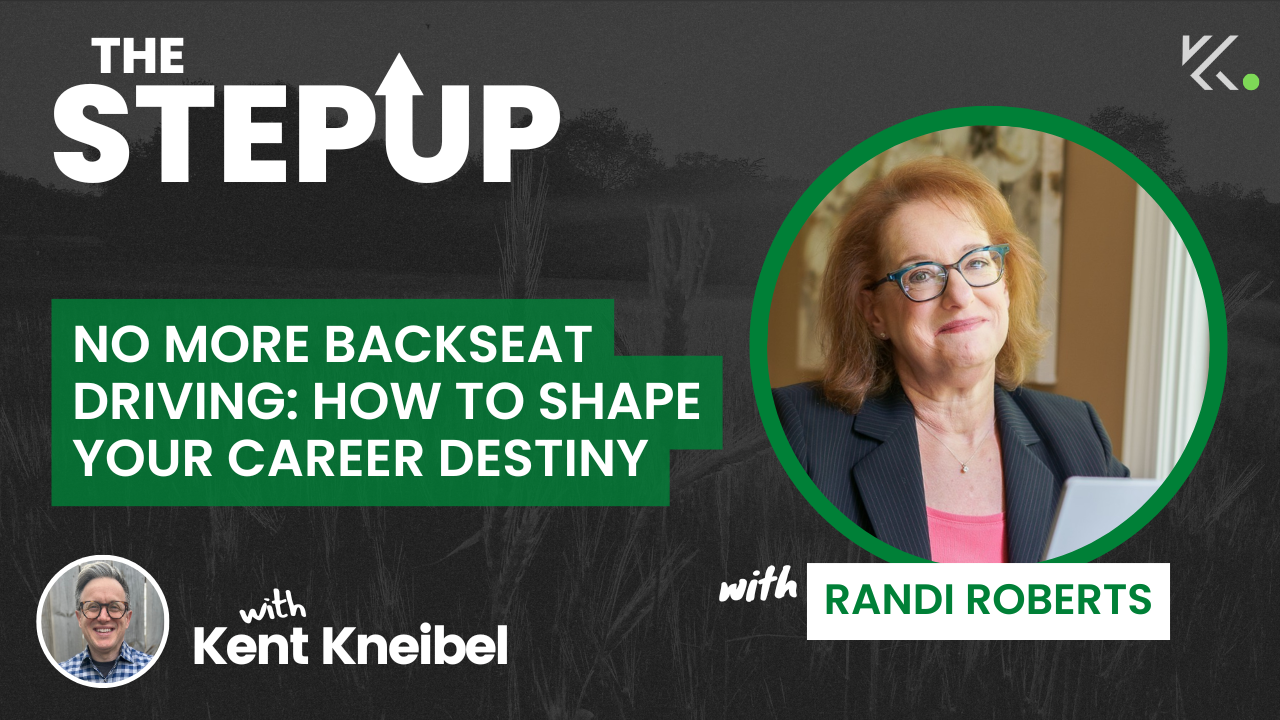
Randi Roberts built a remarkable 30-year career in Pharmaceuticals, rising from Sales Representative to Vice President and Business Unit Head at one of the world's largest pharma companies before serving as Chief Commercial Officer for a start-up. Along the way, she started and ran two businesses. Her journey through four companies (large and small) and multiple career moves taught her to embrace each transition as an opportunity for growth. The value of executive coaching in her own development programs inspired her to make coaching her second career, using her business leadership experience to help others navigate their own transitions.
Randi holds a BA in Sociology from San Diego State University and an MBA from The Wharton School of Business. She's an Executive and Career-Life Coach certified by the Institute for Professional Excellence in Coaching and accredited by the International Coach Federation. When she's not coaching, you'll find her near water (she grew up in Santa Monica and now lives on the East Coast), hiking, kayaking, attending music festivals, or reading. She lives with her husband Dave, daughter Emma, and two Border Collies, Charlotte and Wilbur.
We're diving deep into the idea that you gotta take the wheel of your own career, and trust me, it’s a ride worth taking! If you're feeling a little lost or stuck in the passenger seat, this convo is all about finding your groove again. We're chatting with Randy Roberts, a pro who helps folks shake things up and get back on track. She’s got some solid insights on why you can’t just clock in and out without thinking about what makes you tick. Spoiler alert: being happy in one area of your life usually means you need to be happy in others, too! So buckle up as we explore how to shift gears, set your own career path, and make sure you’re steering toward what truly makes you feel alive.
Stepping into the driver's seat of your career is like taking control of the wheel on a road trip; you decide the route, the stops, and the speed. This episode dives deep into the concept of personal and professional ownership, emphasizing that you can’t be unhappy in one part of your life and expect to thrive in another. Our guest, Randy Roberts, an executive and career life coach, shares her journey from thriving in the pharmaceutical industry to discovering her true calling as a coach. She highlights the importance of self-awareness in recognizing when something isn’t working and empowering oneself to make changes. The conversation is light-hearted yet profound, peppered with insights on how to communicate your career aspirations effectively to your leaders. We explore the dynamic between individual responsibility and organizational support, reinforcing that while leaders should guide their teams, ultimate accountability lies with the individual. By engaging in honest conversations about career goals and personal fulfillment, listeners are encouraged to take charge of their professional narratives, ensuring they align with their values and desires for a fulfilling life.
Takeaways:
- In your career, happiness in one area can't cover up unhappiness in another; work-life balance matters.
- People are now more open to reconsidering their career paths and taking control of their careers.
- Creating your path in the corporate world means taking the wheel and steering towards what you really want.
- It's key to keep an open dialogue with your boss about your career goals; it helps you both.
- Reflect on what truly lights you up at work and pursue those dynamics, not just titles.
- Don't forget to verbalize your career thoughts; talking it out can unlock new insights.
Links for today's show:
- Randi's Linked In Page
- https://www.corlinroberts.net/
- Guet's Book / Product
- Kent's Linked In Page
- Promoted Leader Playbook
**Music for this podcast comes from the song Needle & Thread and is provided with permission by Pert' Near Sandstone. Check them out on PertNeaerSandstone.com and on all major streaming platforms.**
*Editing by Fynn Gentle / www.fynngentle.com
Randi Roberts (guest)
00:00:04.160 - 00:00:32.710
We are who we are, whether it's in our career, you know, our work world or our personal life. Like you are who you are. So you can't be unhappy one place and expect to be happy the other. So something, sometimes something has to get fixed.
And I think, I think one of the reasons that it's coming up more now, because I do see it is, is people are giving themselves more permission to think about it and act on it.
Kent Kniebel (host)
00:00:34.470 - 00:01:34.350
Hi there and welcome to the step Expert Voices for Leadership Growth. I'm your host, Kent Knievel. Every week I talk to experts who focus on helping leaders step up their leadership game.
If you're new to the show, then on whatever platform you're using, I encourage you to subscribe so you never miss an episode.
One last thing, as a leadership development consultant and executive coach, I have a particular interest in supporting recent internally promoted leaders.
If that's you, or if you support a leader who has been recently promoted, I encourage you to visit my website at Kent Coach Playbook and download a free copy of my 90 day blueprint filled with practical advice for you or the leader you support in hitting the ground running and truly stepping up to their new leadership level. Without further ado, on with the show. Welcome, everybody. Today we're here to talk about getting in the driver's seat of your own career.
And with me for this conversation is Randy Roberts. She's an executive coach and career life coach. She works with executives to help them love their careers and achieve their goals.
Randy, thank you for joining me today.
Randi Roberts (guest)
00:01:34.750 - 00:01:36.590
Thanks, Ken. I'm really happy to be here.
Kent Kniebel (host)
00:01:36.750 - 00:01:42.590
Awesome. Well, before we get started, we'd love to hear how did you get here today? Tell us a little bit about your, your career story.
Randi Roberts (guest)
00:01:42.750 - 00:04:06.300
Yeah, it's been, it's been a long journey, but really great one.
My first career was in pharmaceutical industry and I actually started as a sales rep carrying a bag into doctor's offices in California where I grew up and then worked my way up through sales training, marketing, got my MBA and then went into. I was a total of three big pharma companies and the biggest jobs I held were running business units in the US market, multi billion dollar business.
And I loved it. I was one of those. I was in Pharma for about 30 years and every day I woke up before the alarm, couldn't wait to get to work.
And I considered myself so lucky to be so engaged in what I was doing.
So I know what that feels like and then I know when that goes away because it felt as though all Of a sudden, one day I was hitting the snooze button and not quite sure what had changed. Had I changed? Had the world changed, had my job changed, what was it?
So had to do some real soul searching to figure that out and actually left big pharma, left the big corporate world, started my own consulting company as a way to keep myself engaged and busy while I was doing a bigger search, because I know that if I get bored, I'll cause trouble for myself. And then one of my clients hired me as chief commercial officer for a small startup.
And then after that opportunity went away, I moved on to what I knew I wanted the next big chunk of my career to be, which was as an executive coach, did my training, got certified, all the things, and have been running my own coaching business for about eight years now. And I can tell you, for eight years, I've been back to jumping out of bed before the alarm. My world is very different.
I have created a situation for myself that is much more flexible, fits what I want in this time of my life.
But really I feel I've always needed to do some good while I'm doing well, and that has been satisfied at different phases, in different ways, at different phases of my life. Now the good I do is helping other people achieve their goals. And I feel very fortunate to work with the clients that I do. Get to talk to.
People like you. Yeah, it was a great first chapter. It's been a great second chapter.
Kent Kniebel (host)
00:04:06.540 - 00:04:29.350
Awesome.
And I know that one of the things that you wanted to talk about today, and I'm interested in it as well, is people taking ownership over their career, as you put it, stepping into the driver's seat of their career. And so my first question to you is, how has this become sort of a passion area of yours?
Is it a big focus for you or particularly something you're thinking a lot about these days?
Randi Roberts (guest)
00:04:30.790 - 00:07:11.720
Yeah, it. It's a great question.
To a great extent, the coaches that I know, we coach what we know, we coach what we've experienced and lessons that we've learned the hard way to try and make it easier for the folks following us behind, if you will. And that's definitely true of me.
I was very lucky to work with some great companies that really invested a lot in people they saw as high potential, Both moving us around to give us different experiences, to broaden our background, giving us mentors, setting up some really wonderful specific development programs in a lot of different ways. So I know what that's like. I also know that they have very specific Tracks that they would like people to follow.
You take this job, then you take this job, then you take this thing, and eventually it's that thing. And for a lot of people, that works out great.
But what I really believe now, I found it for myself and I work with a lot of clients on, is you have to create your own path. It's great to have an idea of where you want to get.
But the beautiful thing about, you know, sort of the world now is people take different journeys, it's a bit more circuitous, it's not a straight line. And I think that people in big corporate settings, you know, take the advice and the support that you're given, but make your own decisions.
Because, you know, for example, my world was always on the commercial side of the pharma industry, so mostly sales and marketing.
And there were a lot of times where a salesperson would move up to sales manager, might move up to regional director and want to take on a bigger opportunity in the company. And there are a lot of people that have the bias that you must have marketing experience. Now, I see a lot of pros to that and sort of lean that way.
But that's not the right thing for everybody.
And so we all need to step into the control, you know, step behind the control panel, whatever analogy you want to use, and make those decisions for ourselves.
Because like, say somebody told you in that example, spend two years in marketing and then you can get back to this other thing or take on something bigger. There's a lot of benefit in trying different things. But, but that's two years of your life.
And if it's not going to be the right thing for you, if you know that, don't do it. Create a different path for yourself. Sometimes you jump in and it turns out to be the right thing.
But like, our lives are moving while those things are happening and I think we need to make our own decisions. If. Does that make sense?
Kent Kniebel (host)
00:07:11.800 - 00:07:42.290
It does. Yeah. And I think it's, it's fun.
It's funny because I feel like the last couple years that I was in hr, I was regularly, you know, kind of in this conversation of both trying to explain to employees who were, I would say, you know, mid ish career to prior that, you know, there is not a mythical career plan that we have for you in like a filing cabinet.
Randi Roberts (guest)
00:07:42.290 - 00:07:42.570
Right.
Kent Kniebel (host)
00:07:42.570 - 00:07:48.450
And you know, because we would get this question, you know, what's my career path? And I think even that question is.
Randi Roberts (guest)
00:07:48.450 - 00:07:50.270
Feels funny to me, but. I'm sorry to interrupt.
Kent Kniebel (host)
00:07:50.270 - 00:08:05.630
Yeah, yeah, no, yeah, well. And What I would say is what would always illuminate the storytelling that would illuminate that point.
The point of we don't have that mythical path for you would be when we actually had leaders do some storytelling of their own career paths.
Randi Roberts (guest)
00:08:05.950 - 00:08:06.270
Right.
Kent Kniebel (host)
00:08:06.270 - 00:08:34.250
And, and inevitably these stories would, I don't.
Nine times out of 10, I would say there was always some odd left hand turn or, or right hand turn that had, you know, that the, the leader in question planned on.
That was not the path that they thought they were on, but, but ended up providing, you know, tremendous experience and was probably critical to getting them to where they're at today.
Randi Roberts (guest)
00:08:34.570 - 00:08:34.930
Right.
Kent Kniebel (host)
00:08:34.930 - 00:08:52.770
And, and even, you know, I was talking to an SVP in a, an innovation role just on Friday and you know, he was talking about succession for his own role and saying, no one's gonna have, I'll call him Steve.
Randi Roberts (guest)
00:08:52.850 - 00:08:53.210
Right?
Kent Kniebel (host)
00:08:53.210 - 00:08:56.850
No one's gonna have Steve's path to the role again.
Randi Roberts (guest)
00:08:56.850 - 00:08:57.250
Right.
Kent Kniebel (host)
00:08:57.250 - 00:09:13.810
My path to this role. He was like, I wouldn't wish it upon anyone. It was kind of how he put it.
He was like, it was this left hand turn, then that right hand turn, you know. But he was talking about like, how do we prepare?
And that part of that conversation was talking to him about, well, how do we think more broadly about what the experiences are.
Randi Roberts (guest)
00:09:13.890 - 00:09:14.290
Right.
Kent Kniebel (host)
00:09:14.860 - 00:09:52.920
To get you there, to get someone there knowing that there is no, no, there is.
The path he was on was not a natural path, you know, let alone how I've seen in other organizations, sometimes leaders, and sometimes this can be reinforced. Sometimes they do have a path in mind. And oftentimes what I see. So now I'm kind of talking to both sides of my mouth.
But sometimes what I see, when there is a path in mind, that sometimes it either only produces exactly what you've had, which therefore, if you think about results and business outcomes, might only produce what you've always gotten.
Randi Roberts (guest)
00:09:53.240 - 00:09:53.560
Right.
Kent Kniebel (host)
00:09:53.560 - 00:10:01.960
Versus, you know, opening the aperture more and thinking about experiences more broadly than specifically.
Randi Roberts (guest)
00:10:01.960 - 00:10:02.240
Right.
Kent Kniebel (host)
00:10:02.240 - 00:10:02.920
Stepwise.
Randi Roberts (guest)
00:10:03.240 - 00:11:58.500
Yeah, no, I think that that's true.
And look, in a company that has these well established programs, if there is, you know, I've been part of these talent discussions and succession planning discussions and, and they're important and they sometimes make other leaders in the company aware of the talent that you have. So they really are valuable. I think an important next step that often is missed is tell the person what the discussion is.
Tell the person how they are viewed, what their potential is seen to be, what the discussion is about them.
We shouldn't be having conversation behind closed doors that isn't in some way acted upon when it benefits somebody, you know, the feedback could benefit someone, someone else. And that's the dynamic that pushes people into the passenger seat of their own career. And so I think there's a push and a pull here.
There's as the, you know, engaged party, the person who's looking for the opportunities. We have an opportunity, and I would say even a responsibility to ourselves to make what we want known.
Now, that does not mean be demanding and create a situation where we're giving an ultimatum. Not at all. It's more a. I want to partner on this. Here are my thoughts. Here's what I want to get to.
Here's what I think are the skills that I need to develop. Here's the experience I think that I could have. What do you think? What do you have to add to that?
And if there's the right open communication there, you can really tailor the path to the individual in a way that works within the company. And sometimes that results in someone deciding, wait a minute, that isn't going to happen for me here.
But that's real better that they know and they make a long term decision for themselves, even if it means the company loses that talent.
Kent Kniebel (host)
00:11:58.900 - 00:12:11.380
Yeah, well, and I would say too, you know, leaders need to lead the way in having those kinds of conversations with their employees. And I always say, probably a little more regularly than you think.
Randi Roberts (guest)
00:12:12.350 - 00:12:12.470
Right.
Kent Kniebel (host)
00:12:12.470 - 00:12:44.110
I think leaders need to lead the way in having these conversations and probably more regularly than they think. Right. I always suggest you should probably have a career conversation of some kind. Even if it's just a simple check in probably every six months.
Because things can change in people's lives, both at work, outside of work, that can change someone's idea of what they want in their career on a dime. And it can be great things that happen.
Randi Roberts (guest)
00:12:44.110 - 00:12:44.470
Right.
Kent Kniebel (host)
00:12:44.470 - 00:13:20.650
I, you know, I got to have this great experience or I was on this great project. It opened my eyes to maybe a different thing. Let's talk about that. It can be less fun things.
You know, someone in my family has a very serious illness. Like, I'm just not like right now. I need stability and to just be able to show up every day.
And I'm gonna maybe downshift my day to day, like drive for the next thing while I, you know, take care of this thing. Or, you know, six months into a promotion or into a new role, someone might say, this is not for me.
Randi Roberts (guest)
00:13:20.650 - 00:13:21.050
Right.
Kent Kniebel (host)
00:13:21.050 - 00:13:28.650
And you know, I think leaders need to have these conversations again, like I said, probably A little more frequently than they might imagine.
Randi Roberts (guest)
00:13:28.970 - 00:14:15.200
I agree with you.
And I think, you know, one of the sort of pet peeves I've always had is there's this great process in many companies for setting objectives for the year. Right.
You spend a lot of time figuring out what they are, lining up the actions you're going to take to that, and then very often don't look at them again until it's time for performance appraisal.
So if companies set, you know, just sort of a habit of every six months, say, taking a look at boss and the person that reports to them, taking a look at what those objectives are and just even inviting that. Has anything changed with career thinking that we need to talk about it?
It allows the person to bring that up in a comfortable way and it doesn't have to be a big involved process, but I think it's a good habit to build.
Kent Kniebel (host)
00:14:15.600 - 00:14:26.080
Yeah. Yeah.
And I think to go back to a point you were making is, you know, bringing some of these conversations we're having about talent behind closed doors in. Into the light of day two.
Randi Roberts (guest)
00:14:26.080 - 00:14:26.400
Right.
Kent Kniebel (host)
00:14:26.800 - 00:14:32.320
Obviously, everybody's worried about, and I think they should be careful about making promises that can't be made.
Randi Roberts (guest)
00:14:32.890 - 00:14:33.050
Right.
Kent Kniebel (host)
00:14:33.050 - 00:15:37.830
You know, you can't say, you know, we think you're going to be the next director of marketing when we don't know when that role is going to become vacant. We don't know what's going to be happening in the economy and the company, etc. Etc. Can't make that promise.
But you can say more generic things like, you know, we think you have the potential to be in that role someday depending on, you know, how things, you know, how things progress or our developmental focus or, you know, you know, we think you're heading in that direction. Let's, like, if that's of interest to you, how do we keep you developing toward that or something like that. Right. But.
And I think the other thing that I learned too was you probably need to have the conversations of, we think very highly of you way more often than you think as well. Probably way more than every six months. Right. I think it's really easy, especially for high performers, high achievers who.
Who maybe are even dabbling in a little bit of perfectionism to forget that conversation much faster than you think.
Randi Roberts (guest)
00:15:38.070 - 00:16:43.070
Well, I think fast feedback in general is important.
And when I was leading large teams, what I tried to do is when someone would say something, you know, that Kent, he really went the extra mile to do XYZ appreciated it. I would pass that along. As quickly as I could. This, I mean, it feels great.
It reinforces the right behavior, it helps build the relationship between me and in this instance, you're my employee.
But the, the other thing is, on the other hand, if you hear any feedback that's not, you know, that's, that's reflecting a need for a change, it's really important to give that feedback quickly because what happens in organizations is people develop these perceptions sometimes based on that someone else said. And if you don't provide proof of something different, if it's appropriate, that kind of thing, it becomes fact. And that's not always fair.
So whether it's good or it's bad, share the feedback. People deserve to know what's going on around them.
Kent Kniebel (host)
00:16:43.390 - 00:16:57.610
Yeah, yeah.
So what else are you running into when you are working with people? On stepping into the driver's seat, so to speak. How else are you nudging and coaching people around that concept?
Randi Roberts (guest)
00:16:58.250 - 00:19:44.620
Well, there's a number of things. One of them is to break down. What are the things about your current role that are lighting you up? When have you been at your best?
Like to just get clear on not the job you want, but the dynamics that are best for you.
If it's leading a team, if it's working with a lot of peers, if it's, it's growing a new business unit, whatever that is, figure out what works for you and likewise figure out what doesn't work for you.
It might be a values misalignment with management or whatever that is, but the more clear you can get on what you need and what puts you in the best position to succeed, the better. And then you can identify what that looks like and the reason that I say dynamics rather than a job. Some of us have a job in mind.
I want to be vice president of marketing, that kind of thing. But some of us are more, I want to do a job that does these things in general, which actually I think is healthy in a lot of ways.
One, sometimes things change. Like let's say it's a five year path between today and what my goal is.
The company may change, the world may change, that particular job may not exist. Stuff happens.
So if you're more focused on what's the nature of the work than the title, you can more easily shift on a dime and you will set yourself up to expect what that's going to be like. Because I've had clients that, you know, I've been working for, you know, 15 years towards a business unit lead role.
And I've done all of these things, and then they finally get the job and it's like, whoa, this is not what I thought it was going to be, and this is not right for me. And maybe in the 15 years since they set the goal, they've really changed, or what they want has really changed.
So focusing on sort of the meat of the job rather than the chair, the title, whatever, can set you up well in both ways. And I think the more clear people can get on what the goal is. You know, some people ask, you know, they'll. They'll talk about it.
What's the job you want to retire from? I don't know if that's the right question, but, like, what's the ultimate career goal that you have?
The more clear you can get on that, the easier choices are. Because, like, strategy is all about making choices. Right. And so that job might be almost like picking your lanes.
And you can say, like, if that's 10 years away, what does Randy, 10 years from now, who's stepping into that job, need Randy to do today to set up that path? And so you can, if you have that in mind, you can always change it. You're making the rules.
But if you have that in mind, it makes choices that you make today easier.
Kent Kniebel (host)
00:19:44.940 - 00:19:52.460
Yeah. So two things and keep me honest here, because I want to come back to stating your goal. I think you've said that a couple times now.
Randi Roberts (guest)
00:19:52.610 - 00:19:52.850
Now.
Kent Kniebel (host)
00:19:53.250 - 00:20:25.180
But before we get there, one thing I am interestingly running into, and I'm curious if you're running into this as well, is almost a slight pivot to this, which is folks who are maybe managerish level, depending on size of the organization that has lots of meaning behind it, that title, but manager directorish level, really looking. I find this over the last year a lot, maybe the last two years, looking at that next level and saying, not sure I actually want that anymore.
Randi Roberts (guest)
00:20:25.420 - 00:20:25.820
Right.
Kent Kniebel (host)
00:20:25.820 - 00:21:34.360
And.
And I don't know what's in, you know, I can make some assumptions as to what's in the water, what's in the air, but I'm seeing some people, and maybe it was. Maybe it was, you know, Covid. Maybe it was sort of the, the back and forth of tariffs at the beginning of 2025 here.
That's, that's, you know, something, some, something has started to make some folks at least see the matrix code, so to speak, and are actually asking themselves these questions that you're posing here, which is beyond the title. How do I want my day to day to look and feel and starting to look at that next level?
People who organizations have actually wanted to be on that path are doing some of the math for themselves and saying, I don't know that A plus B equals a life well lived for me anymore anymore. Like, not, not that they want to leave corporate America, but say, like, I think I like what I'm doing and I no longer want to reach for that thing.
Or just questioning, is reaching for that thing really worth it? I'm wondering if you're bumping into that very same dynamic these days.
Randi Roberts (guest)
00:21:34.680 - 00:23:33.470
I am. And you know, the other element I'll add to that is I don't know if that's right for me now because we go through different seasons of our lives.
I mean, I'm. I see that a lot and I'm really passionate about it.
I mean, my own podcast and a lot of the programs that I do are called Fulfilling Career Happy Life. Because it is about both. We are who we are, whether it's in our career, you know, our work world, or our personal life. Like, you are who you are.
So you can't be unhappy one place and expect to be happy the other. So something, sometimes something has to get fixed.
And I think, I think one of the reasons that it's coming up more now, because I do see it, is people are giving themselves more permission to think about it and act on it.
I actually think the folks coming into the work world now are smarter than I was, than sort of my generation of that work world was because we were head down, do the work, get ahead, that kind of thing. And, and people now are expecting to work for companies that have philanthropic aspects to it, not work, you know, 24 7, not travel all the time.
They have a life and they want to live that life too. So that's some of the dynamics I think are at play. But like all the factors you mentioned, it's in the air we breathe. We're in a post Covid world.
There's a lot of companies that were totally remote that are pulling people back in now. That's a change for people, and you have to figure out what that means for you. The world is changing, the dynamics are changing.
You know, you have to figure out what it means for you. And that's all the more reason to be in the driver's seat of your own career. You can put all those pieces together in the best way for yourself.
No matter how much someone has your best interest at heart, you're the one that should be making those decisions.
Kent Kniebel (host)
00:23:34.730 - 00:24:13.070
Well, and so that brings me back to stating what, what your goals are, right to your leader.
I've been in numerous, you know, conversations, coaching conversations too, where so like you, right, I, when I was in my corporate job in hr, I was in those talent review or succession planning kind of conversations where we're identifying high potential leaders.
And in my experience, the leaders who are best able to, to advocate and speak about and on behalf of their team members know what their team members want and even on what kind of timeline they might want it. Now.
Randi Roberts (guest)
00:24:13.070 - 00:24:13.510
Yeah.
Kent Kniebel (host)
00:24:13.510 - 00:24:25.510
That doesn't mean, you know, so let me pause there and say, so I've, I've had some conversations where I've been talking to folks coaching folks around, how do you state your goal and timeline for that goal?
Randi Roberts (guest)
00:24:25.590 - 00:24:25.950
Right.
Kent Kniebel (host)
00:24:25.950 - 00:25:07.410
I want to be this within this amount of time while also helping them understand that that's a dialogue too.
Your leader might have a slight difference of opinion on what that timeline might be or not, but they're going to feel a lot better as they're approaching what your deadline might be. They're going to be more empowered to either advocate on your behalf or provide you with good coaching.
You know, if that time, that quote, unquote timeline looks like it might be slipping. But I, I, I right where you are.
I think you were talking about this early in our, in our conversation around, you know, state what that goal is, state what you want and when you want it. Yeah.
Randi Roberts (guest)
00:25:07.650 - 00:27:06.680
And the first step is you got to get clear on that goal.
And sometimes, you know, you should revisit it as things change in your life and whatever, you know, you may see possibilities you didn't see before, but, you know, stating like, I've seen people and I've been in the position early in my career, you get asked, what do you want to do? It's like, ooh, I should say this, that kind of thing. Well, you know, you need to figure out what the answer is for yourself authentically.
Now, having said that, there are times when you encounter somebody that may want to have that conversation with you that for, for whatever reason has proven that you can't trust them with that conversation or something.
Sometimes we have to play a little bit of a game, but for the most part, the more we can know what's true for us, the better we can advocate for ourselves and arm our supporters to carry that message forward. When I went into executive coaching, I did not expect the degree to which we'd be focused on the, the inner work.
I thought it would be all the career stuff. And the truth is we do way more inner work than I thought.
Understanding what your values and drivers are, you know, understanding the dynamic that puts you at your best, understanding what kind of boss you want to work for, those kinds of things. And it's surprising to me sometimes when I talk to people about careers and what do you want? And whatever.
And I'll ask them a question that feels simple, like, at what age are you planning to retire? That matters. Right. And they're, oh, never thought about that. Okay. And I sort of suggested them that it may be time even to make a financial plan.
Now, that's not my area of expertise. I don't go there. But I think it's a good idea for people to be thinking ahead again.
What is it that you want to get to so you can make choices today that set that future up for you?
Kent Kniebel (host)
00:27:06.840 - 00:27:09.200
Yeah, yeah. And what are your whys behind it, too?
Randi Roberts (guest)
00:27:09.200 - 00:27:09.480
Right.
Kent Kniebel (host)
00:27:09.480 - 00:27:37.510
If I probably have said this on a few different. A few different. Of my episodes now with different folks for different reasons, which is, you know, I was in this. In a.
In a workshop, and the guy who was leading it was just like, let's talk about, you know, the layers of your whys. You know, why you're doing what you're doing. And he. He immediately put out there because he's. He's probably done this so many times.
He said, if one of your whys is I want to make gobs of money, that's fine. Put that down. But why do you want to make gobs of money?
Randi Roberts (guest)
00:27:37.510 - 00:27:37.830
Right.
Kent Kniebel (host)
00:27:37.980 - 00:27:39.100
And why do you want that?
Randi Roberts (guest)
00:27:39.100 - 00:27:39.420
Right.
Kent Kniebel (host)
00:27:39.420 - 00:27:42.620
And so getting really clear on what your whys are.
Randi Roberts (guest)
00:27:43.820 - 00:27:44.180
Right.
Kent Kniebel (host)
00:27:44.180 - 00:27:51.420
So that, again, I think it's just one more of those pieces to. I'll use your words. That helps you step into the driver's seat.
Randi Roberts (guest)
00:27:51.420 - 00:28:57.230
Right?
Yeah. You know, money is an interesting topic because money is not just money.
Like, I can open my, you know, my stock portfolio statement and see what my net worth is, or, you know, I could see what my salary is or obviously track what my business is bringing in. In. But, yeah, why is that important? What does it mean to you? And I do have that conversation with people if they're looking for a new job.
Say, okay, what are your expectations for salary? What's your hurdle? What do you need to make that move? And sometimes it's in dollars and sometimes it's in percentage over where I am.
Okay, the next question is, what's going to be different in your life when you achieve that? Because then they can think about that. Why?
And, you know, for some people, it's, well, it's a little bit more security or it's more money in my kid's college fund or, you know, I support an elderly parent. Whatever it is, it's the thing that the money will enable them to do.
And sometimes even the way they define themselves as a result of it, I'm the person that can help other people or whatever that is. It's way more than just money.
Kent Kniebel (host)
00:28:57.710 - 00:29:06.530
Yeah, yeah.
So what else? When it comes to getting people to step into the driver's seat, what are some of the other conversations you're having and nudges you're making?
Randi Roberts (guest)
00:29:07.160 - 00:30:30.650
Yeah, it's interesting because I mentioned before that some people will come to me at a time when they're considering a job transition. In fact, when I see potential new clients, very often they present with some version of.
And what I my own experience was I used to be just really excited by my job and now I'm just exhausted by it. Like, I got to figure this out.
So we dig into what is working for you, what's not working for you, so that sometimes what they find is the things that aren't working for me. I can change right where I am. Because very often there's good either career or financial reasons to stay where you are.
So if you know what it is, you might be able to fix it. And on the other hand, if you decide you have to leave, you know what to look for and what to avoid.
So I would say getting really clear on that is helpful. And in fact, I have a tool, free tool that people can download from my website. It's under.
My website is Randy with Randy with an I randy roberts coaching.com and if you go to the resource section, you'll see the career satisfaction assessment.
And it just can walk you through a way to sort of identify for yourself what is working, what's not working so that you know if you can fix it where you are or if you need to go and make sure you're not not taking the problem with you.
Kent Kniebel (host)
00:30:30.890 - 00:30:31.370
Nice.
Randi Roberts (guest)
00:30:31.610 - 00:31:24.090
So I think that's. That's a great way to start. And then the other. Another big suggestion I have is talk to somebody else.
We tend to get all up in our heads about these things. We may not talk it out. We may not share other ideas.
And something really unlocks when you verbalize this stuff, you talk it out with someone who will listen and, and tell you the truth and maybe add other ideas to the mix. Something changes. So don't get locked in and think you have to solve this yourself. Get some help. You have. You know, it could be a spouse or partner.
It could be a former boss, it could be a peer, it could be a college friend, whatever. There's someone in your world that will engage in that with you, and there's always something to be gained by it.
Then you take whatever happened and you get back in the driver's seat and you figure out what you're going to do with it.
Kent Kniebel (host)
00:31:24.250 - 00:31:30.330
Yeah. Sometimes you. You'd be surprised what unlocks when you have to hear yourself say certain things out loud.
Randi Roberts (guest)
00:31:30.650 - 00:32:16.670
Yeah, I mean, I. I don't know if you have this experience, Kent, but I do fairly frequently where I'll have a conversation, you'll have a session. My sessions with clients are usually 50 minutes.
We may get all the way through to the end of the session, and they'll say something lovely like, randy, you always help me so much. I feel so much better. You're. You're wonderful. And I'll say, you know, that feels great to hear. I really appreciate it.
And do you realize that of this 50 minutes, you talked 42 minutes or whatever, like they should be.
They are talking it through, almost having a conversation with themselves, with an active partner there, and they have gotten themselves to the right place. So it's just that magic that. That happens when you talk it out with a trusted partner.
Kent Kniebel (host)
00:32:17.490 - 00:32:52.260
Yeah.
And I would say if, you know, if you're listening to this call or call this podcast episode and you are, you know, coaching other people, either as a coach or HR or senior leader. Also the power of, like, paraphrasing back to people what they just said.
Because I also would say, sometimes hearing someone else say what you've just said, too, helps you hear it in a different way, too. It's like, oh. I think a favorite saying of mine is like, oh, when you say it back to me in English, that sounds like this. Yeah.
Randi Roberts (guest)
00:32:52.420 - 00:32:57.860
I mean, a lot of times my go to is some version of. So what I hear you saying is this.
Kent Kniebel (host)
00:32:58.740 - 00:32:59.220
Yeah.
Randi Roberts (guest)
00:32:59.380 - 00:33:03.700
And encapsulating it in that way. Yeah, it's very helpful.
Kent Kniebel (host)
00:33:03.780 - 00:33:22.160
Yeah.
Well, so, you know, I think we're getting to, I think, even some advice here. So I'm going to push us into the advice column here and say so as we're.
And it can be about getting in the driver's seat or something else, something that's kind of on your mind. But what's one big piece of advice you have today for leaders who might be listening?
Randi Roberts (guest)
00:33:22.160 - 00:34:33.350
Yeah. So I'm going to give two pieces.
They're related, and it's really for leaders of leaders, because you're developing people that may have, they're impacting others and they may have the opportunity to step into even bigger roles. All these things that we're talking about as we're leading, we're modeling that.
So sometimes that's the best teacher is, you know, people see you walking your talk.
And one way to take that to an even greater degree is my own coach says, like, narrate the situation sometimes when, you know, in, when I was in the world or I have clients now of managing leaders. So you're at least a second third line manager.
Talk them through the decisions you're trying to make, how you're breaking it down, what you may be struggling with. That process not only helps you to work it through, but it brings them along the journey with you. They may help you with a solution.
They will understand where you are and it helps them be more ready when they're in that seat. So those would be the suggestions that I would have. Have. What, what do you have to add to that?
Kent Kniebel (host)
00:34:34.710 - 00:34:37.190
I, you know, I think I said it a few times through the call.
Randi Roberts (guest)
00:34:37.270 - 00:34:37.590
Right.
Kent Kniebel (host)
00:34:37.590 - 00:34:46.030
Is, is have career conversations with your people intentionally and, you know, at least a couple times a year.
Randi Roberts (guest)
00:34:46.030 - 00:34:46.390
Right.
Kent Kniebel (host)
00:34:46.630 - 00:34:52.470
At least every six months. You know, if you haven't never had a big career conversation with someone, we'll have that.
Randi Roberts (guest)
00:34:53.030 - 00:34:53.350
Right.
Kent Kniebel (host)
00:34:53.350 - 00:35:00.960
And then the next one doesn't have to be as big. And as for. Right. It can be, it can be a little more informal and more of a check in.
Randi Roberts (guest)
00:35:00.960 - 00:35:01.240
Right.
Kent Kniebel (host)
00:35:01.240 - 00:35:20.640
Yeah.
Hey, this is, you know, this is what you said you were interested in six months ago. How's that feeling today? How you know, is that still what you're thinking? Are there other things you're thinking?
That's what I, I think I would, I would continue to push people to have more regular, you know, open conversations about what people, you know, what people want to be when they grow up.
Randi Roberts (guest)
00:35:20.640 - 00:35:30.350
Right. I think that sends the message that I care about you. You. I want to help you get what you want. So I think there's every reason to do that.
Kent Kniebel (host)
00:35:30.350 - 00:35:45.630
Yeah.
So for, and I know you, you gave a bit of advice for those like senior leaders who are supporting leaders. But let me go to the next, you know, which is a piece of advice you have for those who support leaders.
So it could be another piece of advice for senior leaders or say HR or coaches out there.
Randi Roberts (guest)
00:35:46.750 - 00:36:59.970
Yeah. I think getting curious is a tremendous leadership tool.
And sometimes we hear things in a certain way and if you ask a few questions, you know, tell me more about that, what does that mean? How does that show up? Whatever it is.
You can understand better where they're coming from and they can understand better where they're coming from because we have, you know, thinkers have a tremendous skill at getting in our own way. And so sometimes getting the next question, like forcing ourselves to sort of double click on it, if you will, what is the why behind this?
As you said, get curious about what they're telling you. I think that can really unlock some things, so you experience it for yourself, you model it for others. It just, it.
It sets up the situation to better match up. What does a person offer and what do they want with what can we provide for them? So, you know, it's all good.
And again, if the match isn't there, better to find out and let the person, you know, find their bliss where they need to and get someone in the role that better fits, you know, what, what success will look like in your company.
Kent Kniebel (host)
00:37:00.610 - 00:37:14.760
Nice. Nice. Awesome.
Well, so, you know, as we're kind of on our way out here, for those who are looking for a little more Randy Rob Roberts in their lives, you know, how can they find you? Where should they find you? What should they reach out to you about?
Randi Roberts (guest)
00:37:15.080 - 00:37:44.930
Yeah, thanks for asking. Probably the best way to find me is through my website.
And again, that's Randy R A N D I robertscoaching.com there's the career satisfaction test that I mentioned on my resource section. There's episodes of all my own podcasts, which is again, fulfilling career habits, happy life. That's also on YouTube.
If you get on my email list, you'll get some some other things. So lots of ways for those poor folks that want more Randy Roberts in their life.
Kent Kniebel (host)
00:37:45.330 - 00:37:53.490
Awesome. Well, I'll make sure to put all of those in the show notes for today. Randy, thank you for coming on the podcast.
This is a fun conversation and I hope we can do it again in the future.
Randi Roberts (guest)
00:37:53.570 - 00:37:56.050
Yeah, I'd enjoy it, Kent. Thanks so much for having me.
Kent Kniebel (host)
00:37:56.130 - 00:38:00.230
All right, that brings us to the end of our episode. Thanks for listening.
Randi Roberts (guest)
00:38:00.300 - 00:38:00.660
Listening.
Kent Kniebel (host)
00:38:00.660 - 00:38:20.220
I'd encourage you to head on over to my website, Kent Coach, and start a conversation with me there. Or check out my promotion playbook at Kent Coach Playbook.
Before you go on with your day, I ask that you please take a moment to leave a rating and a review wherever you listen to podcasts. Five stars. That helps put this podcast in front of more eyes and ears. Until next time, take it easy.


