
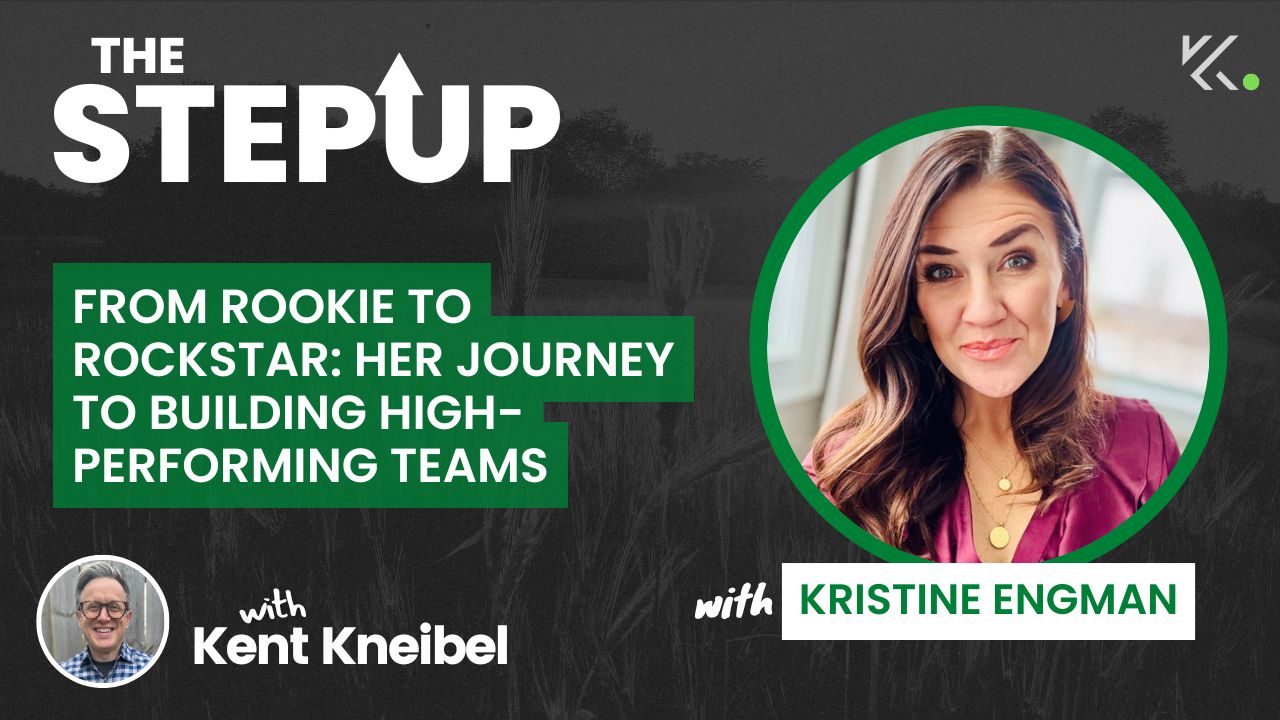
Authenticity is the name of the game in leadership, and today we’re diving deep into what that really means. We're chatting with Kristine Engman, a total rockstar in building high-performing teams, and trust me, she’s got some solid gold nuggets of wisdom to share. We tackle the idea that being vulnerable as a leader can actually pack a punch in building trust and connection within your team—definitely easier said than done, right? Plus, we explore how knowing your team on a personal level sets the stage for a thriving environment where everyone feels valued and heard. So, if you've ever wondered how to step up your leadership game and create a killer team dynamic, you’re in for a treat!
Diving deep into the world of leadership, this episode serves up a hearty discussion on authenticity and vulnerability in the workplace, with Kristine Engman sharing her journey from intern to a powerhouse in the corporate world. We kick things off with a chat about the importance of showing up as your true self – a mantra that sounds easy but can be as tough as nails in practice. Kristine emphasizes that being a leader doesn't mean you have to put on a facade; instead, embracing vulnerability can foster genuine connections with your team. She shares personal anecdotes from her career where being authentic not only helped her navigate challenges but also encouraged her team to do the same. Authenticity, she argues, is the secret sauce to building a high-performing team, where everyone feels valued and understood.
As the conversation rolls on, we explore the nuances of leadership styles, particularly the balance between leading from a place of expertise versus managing teams in unfamiliar territory. Kristine recounts her experiences transitioning from a trading role into management, highlighting how stepping outside of her comfort zone allowed her to grow as a leader. She reflects on the significant lessons learned about trust and listening, pointing out how essential it is for leaders to genuinely understand their team members' strengths and weaknesses. This segment is packed with wisdom for anyone looking to improve their leadership game, stressing that the key to success lies in fostering open lines of communication and building relationships grounded in respect and understanding.
Finally, we wrap up with some practical advice for leaders and their supporters. Kristine stresses the importance of being available and approachable, highlighting that leaders should carve out time to listen to their teams – a move that can transform workplace dynamics. She suggests creating structured opportunities for feedback and connection that make team members feel heard and valued. This episode is a treasure trove of insights for anyone aiming to elevate their leadership skills and cultivate a thriving team culture, reminding us all that in the end, leadership is about people, not just processes.
Takeaways:
- Being your authentic self is key in leadership, but it's easier said than done, right?
- Vulnerability as a leader can be super powerful, but many leaders shy away from it.
- Building high-performing teams starts with knowing your people—what they love and hate about their jobs.
- Communicating effectively means being available and ready to connect with your team members.
- Engaging your team in setting stretch goals can truly elevate performance beyond what they think they can achieve.
- A good leader balances short-term results with long-term vision, ensuring sustainable growth for the team.
Links:
**Music for this podcast comes from the song Needle & Thread and is provided with permission by Pert' Near Sandstone. Check them out on PertNeaerSandstone.com and on all major streaming platforms.**
Kristine Engman (guest)
00:00:04.160 - 00:00:32.620
The biggest thing for me is like showing up as authentically you, which is, I know a lot of people say it. I think it's easier to say than do. I think being vulnerable as a leader is one of the most powerful things you can do.
And I think a lot of times you don't necessarily get that from leaders. I feel like people are human too. But you can be very relatable human. You. Right. While still showing up as a leader.
Kent Kniebbel (host)
00:00:34.460 - 00:01:45.120
Hi there and welcome to the Step up expert Voices for Leadership Growth. I'm your host, Kent Knievel. Every week I talk to experts who focus on helping leaders step up their leadership game.
If you're new to the show, then on whatever platform you're using, I encourage you to subscribe so you never miss an episode.
One last thing, As a leadership development consultant and executive coach, I have a particular interest in supporting recent internally promoted leaders.
If that's you, or if you support a leader who has been recently promoted, I encourage you to visit my website at Kent Coach Playbook and download a free copy of my 90 day blueprint filled with practical advice for you or the leader you support in hitting the ground running and truly stepping up to their new leadership level. Without further ado, on with the show. Welcome everyone.
Today we are talking about building high performing teams and with me is a former colleague of mine, Christine Engman, to help us talk about this. So both an expert, I would say, I will say an expert in building high performing teams as a leader herself and likely a consultant now.
And so welcome Christine. Love to. I'm so glad you agreed to be here today.
Kristine Engman (guest)
00:01:45.280 - 00:01:48.160
Thanks for inviting me, Kent. Looking forward to the conversation.
Kent Kniebbel (host)
00:01:48.320 - 00:02:01.200
Yeah. Awesome. Well, let's start with this. You know, I think the listeners love to hear how people landed in doing what they're doing today.
So I'd love to hear your career arc before we get into our conversation.
Kristine Engman (guest)
00:02:02.450 - 00:08:33.640
Absolutely.
I feel like most of my career and really life has been a lot of following my gut, following what I'm good at and trusting myself enough to take the next step or leap and being okay with that journey and not knowing what, what the next thing is. So I started my career out of college with Cargill. So I'm from a small town in Northern Minnesota. Virginia. Minnesota.
Went to college at Bemidji State, was a student athlete. I played volleyball there, went to be a math teacher, decided that I did not enjoy going to be a math teacher and took an accounting class for fun.
Fell into the business world. Cargill came to recruit at Bemidji State. I got one of the two internships and decided to say yes to a company, which it's sad to say I did not.
I had never heard of and they're like the largest privately owned company in the world. But I obviously lived a sheltered life, so I said yes. And I initially was supposed to be an accountant for my internship.
And two weeks before I started, one of their credit analysts for the energy group left. And so someone brilliant said, let's just have the intern do it.
So, so instead of doing what intern, which is getting put on projects, I was doing like a full time job as a credit analyst seated on the center of the trade floor in energy.
And maybe to back up for a second when I was taking accounting classes and majoring in accounting, all I knew were the things I didn't want to do in accounting. I didn't want to be in private accounting, I didn't want to be in audit, I didn't want to do people's taxes.
And it wasn't until the moment where I was a credit analyst in the center of the trade floor that I had the light bulb moment. Aha, I want to be a trader. And so then from there I was hired full time as an accountant in Cargill's energy group.
And I told my manager like two weeks in that I want to be a trader and I will do this job to the best of my ability, but can you help me or what are the things that I should do to become a trader? And so I spent a lot of time learning about what the traders were doing, getting on projects that involved myself with the traders.
And a year after I started entry level real time energy position opened up in tradie. And that was the probably second big leap that I had where I went into a space that was very unknown.
There wasn't a lot of people that looked like me. I was one of the only females. I was the youngest real time traders in the country and I loved every minute of it.
I loved the challenge, I loved that the harder I worked, the more money I was making for the company when I was trading. And I just really enjoyed it.
And then from there I spent the next 10 years in the energy trading business working my way up to a day trader and then a term trader and managing schedulers and different teams. And that's sort of important when you think about my journey as a manager and a leader.
Those first 10 years, as I was taking on more and more responsibility with people, I was also coming from subject matter, expert in things that they were doing. And so my leadership style and, like, how I was managing was also coming from, I know how to do your jobs. I've done your jobs.
And so I felt very confident in managing and leading people.
And then I took a step out of trading for a year and worked with the M and A team to acquire some investment bank physical books for Cargill as the lead trader on those projects. And then I took a bigger leap.
So I had decided that I really wanted to get into more of the core of what Cargill was known for, which was more agriculture, food, space. And so I took a big leap into what was the corn milling businesses.
And I was responsible for all of the physical origination of corn into all of our assets in North America. And then I was also responsible for trading the slate for Cargill and responsible for helping our consumer customers manage their price risk.
I was in that role for about three and a half years. And that was like being thrown into the deep end and not knowing how to swim because I had no expertise in agriculture or food.
You know, everybody that was on my team, I was the first time I was managing people that were not in my physical location and managing managers. And so it really made me think about how to be successful as a manager and probably some of the things we'll talk about later in leadership.
And then the last step in my Cargill career was I moved over to the oil space. I was the North America trading lead for veg, Oils and Fats. And then I, after a few years, was asked to take the global lead.
So I was the global trading and risk management director for Oils and Fats for the food, feed and fuel businesses. And then I took a big step out of corporate America. Another leap, a big leap. This was like the leap to the unknown.
All the other leaps, you could sort of see it and you talk to people. This leap was a. I think that I need to take a step out of the corporate world, both professional and personal reasons.
You know, on the professional side, I was traveling a lot. I was doing a lot of things. I was enjoying it. I could have seen myself in the corporate world for another 20 years and maybe I will go back there.
But on the personal side, I also needed a little bit more flexibility with where my family was at that stage.
And I felt like it was the perfect time for me to take a bigger leap and go run after some of the things that I hadn't gotten to run after, maybe as hard when I was in the corporate world. And so for a while, I just enjoyed some Family time. And then I actually said yes to a podcast as a favor to another colleague.
And that kick started my consulting career and I have been doing that for the last nine months. So consulting around business strategy, leadership, primarily in like any.
Any businesses that have physical commodities, since that's the prime bulk of my background, but then also doing some career coaching, which is some of my favorite things to do.
Kent Kniebbel (host)
00:08:33.880 - 00:08:44.360
Cool. So primarily coaching and consulting. You said business strat, like business strategy and coaching in commodity trading businesses.
Kristine Engman (guest)
00:08:44.840 - 00:08:51.250
Yes. Or business. Yeah. Have a commodity component to their business. Exactly. Nice.
Kent Kniebbel (host)
00:08:52.450 - 00:09:24.430
Love it. And I think there's a clear arc in here around.
And I think you said it right at the beginning and I'll put it in my words, which is like, don't create a plan and hold too tight to it. Right.
It sounds like you had a number of opportunities that maybe had you created the long term career plan for yourself that you wouldn't have put on that map. Would you agree? Like, so kind of being open to what the possibilities might be and taking those leaps is a. Yeah, yeah, absolutely.
Kristine Engman (guest)
00:09:24.590 - 00:10:18.370
And it's interesting, a few months ago I got to go and explain to a bunch of 8th grade middle schoolers what I do and like their career day and they bring in professionals. And I think there's a lot of pressure for people to like, pick a path and decide and know what you want to do.
And I was there telling them, like, it's okay that you don't know what you want to do or what profession or like what, what specific jobs you want to do.
For me, it's been way more about like, what are things that I really are interesting to me that I'm really good at that match well with like what I bring to the table, where do I want to be spending my time, you know, and being okay with like the unknown and exactly what that looks like. Because no, I would not have put any of those jobs on the table because I didn't really know they existed, you know.
Kent Kniebbel (host)
00:10:18.930 - 00:10:34.050
Yeah. And I think a common thing that's happening, it happens in bursts. Right. I think we're in one right now where some of the jobs don't.
Not only did you not know that they existed, but they didn't exist. Right. Two years ago. Right.
Kristine Engman (guest)
00:10:34.450 - 00:11:23.460
Yeah, exactly. And sometimes listening to people that see things in you that you don't see.
So like when I took that step out of trading for a year and worked with like on this big project with the strategy team, I really didn't want to do that. Like, I had. I kept seeking out people that I thought would would have the same view as me. Like, don't leave trading, you shouldn't leave trading.
And most people, especially the ones that were in like my inner circle of like trust that I really respected, were like, you would be really good at this. This would be really good for you. It would stretch you in a different way. And they were totally right.
So I also think it's about like, you know, listening to others about what they see in you and what you can bring to the table. Especially if it's not maybe a role that you would have otherwise looked at.
Kent Kniebbel (host)
00:11:23.780 - 00:11:39.100
Yeah. Yeah. Cool. That takes a lot of.
Maybe not a lot, but it takes leaders also seeing that in you and making that case on your behalf in rooms you're not in. But also help trying to make that case to you as well.
Kristine Engman (guest)
00:11:39.660 - 00:11:44.780
Yeah. But I think they have to know you to be able to do it, which is really important. Right?
Kent Kniebbel (host)
00:11:45.100 - 00:13:02.020
Yeah. Yeah. There's something I want.
Before we get into our topic of, of high performance teams or high performing teams, you had talked about two critical sort of leadership experiences. One where you were leading your first leadership experience leading the team or our team where you have that exact expertise.
And then later when you were managing managers, it was not your area of expertise. And I talk about this in my consulting often. Right.
Because I think in the one bucket of managing where you have your expertise, one of the biggest challenges for leaders is letting go of how you would have done things. And. Right. And sort of, sort of almost letting go of your expertise.
But then there's the challenge when you're managing in an area that you don't have the expertise, which is you almost need to work on that early so that you can be comfortable with it later. And. Right. That you're really leaning on the expertise of your team.
And like how do I need to manage in this way where I don't have the expertise and the team does and how do I provide leadership and guidance when I don't know the how of the work exactly. Or not you know all the particulars. So I just was curious what your take on either or both of those ends of the spectrum.
Kristine Engman (guest)
00:13:02.420 - 00:14:32.450
Yeah, I mean I think you, a lot of leaders will find themselves in both situations over time. And I don't know if it's better to be in one versus the other. First.
I was smiling as you were talking about the leading from expertise and can be dangerous if you're trying to get people to do things the way that you did them. And I was thinking about when I was in energy.
And I have always, probably because I was accounting major, I've always, like, loved spreadsheets and order and like, putting in formulas and total, like, nerdy stuff. Right. And I had a scheduler who had always, like, handwritten out his schedules, like his process.
And I really, really, really tried to get him to switch to spreadsheets and like, look at my way, and it's so much better and it's quicker and more efficient. We can share it. And he was just really comfortable with the way that he operated and it was actually just as efficient for him to do it that way.
And I realized it wasn't something that I needed to change to have an excellent result. But it took me a while. I was a fairly new manager at the time.
And so I think you can get into the situation where you're trying to force, you know, your ways of doing things and others when maybe it wouldn't make a material difference.
But I do feel like when you step into a role where you're leading in an area where you have like, subject matter expertise and, or you've done some of those jobs before, there's a level of comfort there.
Kent Kniebbel (host)
00:14:32.770 - 00:14:33.170
Right.
Kristine Engman (guest)
00:14:33.250 - 00:14:47.810
I think it's almost you really need to, you know, establish, you know, and push yourself as a, as a leader and a manager to not sort of be comfortable in that and forget all the other important parts about leadership.
Kent Kniebbel (host)
00:14:48.130 - 00:14:48.530
Right.
Kristine Engman (guest)
00:14:49.150 - 00:15:51.060
Feel like when you're in an area where you're, when you're put into an area where you don't have subject matter expertise or you haven't done some of those roles before or you really don't know a lot, I think it really pushes you to bring out all those other areas that make, in my opinion, great leaders and managers because you have to rely on them because you truly don't have the subject matter expertise to sort of fall back and be comfortable in.
And so, you know, that comes to things like really listening to others and getting to know, you know, what, what they do, but not in the level of detail that you would otherwise have if you had the subject matter expertise and trusting that they're going to, you know, do their jobs. And it's just a very different way. But I think it brings out the, the qualities and leadership that you truly have.
And it's a super, I would say, uncomfortable but amazing, like, experience to also get to know who you really are as a leader when you're put in those situations.
Kent Kniebbel (host)
00:15:51.460 - 00:16:33.620
Yeah, yeah, yeah. And there's almost a, you know, when you're managing individual contributors, depending I guess on their career level. Right.
Like there is almost a requirement that you know how to do the job. Especially if it's people who are early in career and learning the job themselves. And then as you're.
Which you know, naturally flows when you're in a higher level role, the people under you have more tenure and experience. And so the level of hands on that, that presumably, or hopefully the level of hands on that that immediate team needs is less. Right.
So let's, but let's segue into high performing teams. Right. So not every team is high performing. You know, I think it gets a lot of talk.
Kristine Engman (guest)
00:16:34.150 - 00:16:34.310
Right.
Kent Kniebbel (host)
00:16:34.310 - 00:16:48.630
In some of the HR space is, you know, and the leadership and coaching space is building high performing teams. So talk to me a little bit about your experience and thinking around building a high performing team.
Kristine Engman (guest)
00:16:49.350 - 00:20:04.300
Yeah, I've come into a few teams where they weren't maybe having coming off of their best year or performance.
So I've got some direct experience with it and it became a little bit of my brand and, and why I moved through different businesses in Cargill because I had had been able to have some success in that space. And I think it was because of that experience of getting into the deep end and not knowing how to swim and really trying to figure it out.
For me one of the biggest things is like truly getting to know your direct reports because I. Because at the end of the day people by far, I mean it's very cliche to say it, but they're totally your biggest asset.
And if you don't take the time when you are coming in to a new team to get to know those individuals, I would say both directly on your team or people that you're going to work with that aren't maybe direct reports but are people you're going to work with on a regular basis.
I think it just, it sets the course for maybe like more of a hierarchy or maybe not the best team environment or it can lead to feelings of like this person doesn't really care about me, they care about more about themselves or their job.
And so I think the first thing for me for building high performing teams is like really getting to know the media people you're gonna be working with and building that relationship. I think that is super key.
I would say the next thing that I have done when I sit down with those people is ask them about the thing that they hate most about their job and the thing that they love the most. And if there was one thing that they could change, what would it be? Yeah, because I Think it's super important to know those things.
And as you start to, you know, build a strategy or you know, really work towards a team goal, I think it's super important to know like what's going on in your team's minds, like what are they really, what are the things they really hate about their jobs and be thinking about, like, is this something that we could be maybe something that somebody on your team hates, somebody else really likes? Doing spreadsheets is a good example. Everybody loves spreadsheets.
So there's just things like that that I think getting to know people sets the course.
And then I think, you know, really having a strategy or a vision or a short term goal or whatever that has come from, like also your team's thoughts or ideas or input is important because they're going to work a heck of a lot harder and you're going to help bring out the best. When they truly feel like they've had some sort of a input.
Even if you don't like their idea and it doesn't end up on the final page, the fact that you've like listened or that they felt like they have had an input and that they're going to be put in a position to get succeed, I think that's important for high performing teams.
I'm actually a big believer in stretch goals, so I actually like to give goals or targets or I would say come up with them as a team that are on the upper end of what people think that they can achieve.
Kent Kniebbel (host)
00:20:04.700 - 00:20:05.260
Yeah.
Kristine Engman (guest)
00:20:05.260 - 00:20:42.880
Because it's really powerful when you can achieve those goals and it's really powerful when the entire team believes that they truly have a part in achieving it.
And then I think just investing in people and really giving them that personal development to grow and being okay with the fact that they have their own ambitions and goals too that may or may not align with the team, which sort of goes back to step one, having that relationship.
So I think some of those like building blocks of like the team dynamic are super key to the overall success of building a high performance form a team.
Kent Kniebbel (host)
00:20:43.120 - 00:22:20.700
Yeah, I love it. You've hit on a massive interest area of mine which is how leaders enter into a team. Right.
And I think a particular area of interest for me is internal promotions. Right. Because now a lot of what you said I would say equally pertains to a leader coming in from outside the organization. Right.
I don't think anything you said doesn't apply to both. Right. If you've been promoted into a leadership role internally or if you're coming in from the outside.
So I want to, I want to like wheel back and like pick into some of these a little bit. Right.
Because I think you've mapped out a really, arguably you've mapped out like a really great, you know, what's the first 60, 90 day or even first six months or year kind of approach to onboarding onto a team and really establishing yourself as the leader.
And you had talked about, the very first thing you talked about was get getting to know both your team members and maybe your, your cross functional partners. Right. So talk to me a little bit about when you are getting to know your team members. You know, what does that look like to you? Right.
Cause I think you talked a bit about the personal relationship, but I think there was also something you said in the first part of our call. I'm going to put it in my own words now, which is there's an element of.
And you said a little bit of it here too, which is an element of like, what do you like about your job? What do you not. My guess, knowing you is there's a bit of career conversation in there as well. Like where is, where does this person want to be?
So go just a little deeper there for us.
Kristine Engman (guest)
00:22:20.940 - 00:23:43.760
Yeah, for sure. So there's definitely an element of like their career, short, medium, long term.
And again, as I said earlier, you don't need to know what your next job is, but I want to know what their aspirations are.
Some people really love being a subject matter expert and continuing to be deep in that knowledge and team and want to stay in the role that they're in or the team that they're in. Totally. Okay. Other people have ambitions to like get a bunch of different experiences or really climb the ladder and that's great too.
I think it's important though to have those conversations to make sure that when you're talking about development and you're thinking about development of your team, that you're able to find those areas that are good for the whole team, but then also look for specific development for the individuals on your team or opportunities. Right. If somebody wants to be in my role in the future. Right.
Then I'm going to be looking to give them opportunities to like speak at a conference or attend something that I should be attending, but I can't because I have a conflict. And so I think it's just really important to have those conversations on the career.
I also didn't touch on just an overall inventory of what are they responsible for? What do they think that they are measured against performance Wise.
Kent Kniebbel (host)
00:23:44.240 - 00:23:44.720
Yeah.
Kristine Engman (guest)
00:23:44.880 - 00:24:50.570
I cannot tell you how many times I've come into roles and those two things do not match what I was told from either the outgoing manager or from what I expected or don't at all match what their prior year performance review was or maybe that compensation incentive portion that they got. And so I think it's also really important to do an inventory of like what do they think they're responsible for?
You know, what are their, what do they like to, how do they like to operate? Some people, you know, really want a high level of autonomy.
Others might like a little bit more direction or approval and also tell them that what your typical leadership style is because if it doesn't match from what they were used to, that also can be a conflict. So yeah, yeah, I mean it's pretty open ended and wide arching and I try to hit it all in the first couple conversations.
But to your other point, on 30, 60, 90 days, it's usually like a 90 day roadmap that I have in my head of from entry to. All right. I feel like we're in a good position to really, really be rolling now.
Kent Kniebbel (host)
00:24:50.810 - 00:26:05.030
Yeah, well, and you also mentioned peers, right. Which I found in some of my coaching.
Peers with the best of intention by the leader, the incoming leader, the best of intention to onboard hit the ground running, keep the team moving, can unintentionally neglect peer relationships and not even just right away, but even over the course of time to where all right, now your team is humming and you're working on something with your peer group under your leader and or something that affects the entire area of your leader's responsibility.
And now you're suddenly in this position where you need to get buy in and all the time that probably should have been spent also getting to know your peers and building those relationships which lays the foundation for influence, you know, was missed. Right. And now you're, you're playing catch up or you're hitting resistance that you wouldn't have expected. Right. So I loved hearing that.
You know, one of the first things that you work on too is getting to know those, those peers, right? The cross functional support.
Kristine Engman (guest)
00:26:05.590 - 00:28:45.000
Oh yeah. And I have so many great stories about that. But like one of my favorites is, and I do that at the same time I'm getting to know my team point.
I'm not waiting because your peers, right. Like you are all also a team, right. And you guys also have a manager that's managing all of you and probably also trying to bring you together.
But you know, the higher up you go the less of that is and the more expectation is that you're just doing those things on your own. But you also have goals for the business that you're operating in.
And I just feel like it makes it so much easier when you're in all of these leadership meetings with all the other cross functional partners and everybody's got their own, you know, agenda or view. If you understand where they're coming from, it's sort of the same thing. And I.
And that they understand where you're coming from and how you're spending your time because then everyone feels like less of a threat and more of a partner.
And I feel like the goal should be that you all feel like partners in like moving the business forward and in each other's journeys and, and having a support versus like a threat. And so I came to a business and I had sat down with the R D lead.
And so again a lot of the businesses I've been in are processing businesses since we R D, which is like there is not a daily, weekly or sometimes even monthly interaction with trading and R D. There's just not a natural. It's not, you know, supply chain.
Yes, there's, there's going to be daily interactions and operations team, daily interactions and finance accounting teams, daily interactions. R and D, not a daily interaction.
And so I set up a meeting with him and I said, why don't I come to the R and D, R and D space which was a different building in a different city.
And so I did that and his first comment was no trading leader has ever come here, you know, And I think that that immediately made him feel like I really do care about R and D, I care about the relationship with you. I want to understand where you're coming from, you know, so that I also can help understand what you're trying to do.
And if I can be an ally in helping you get some things achieved from that space, it's going to make us all better. Right. And I just thought that that was really cool but also important. So it's HR is a big one. Right?
Because it's really hard to build a relationship with HR when you're trying to ask for more money for your team. That's not a good time to start building the relationship.
Not a good time if you have to make a hard decision with a team member that maybe isn't performing. Also not a good time to start the relationship with hr.
Kent Kniebbel (host)
00:28:45.400 - 00:28:45.800
Right.
Kristine Engman (guest)
00:28:45.880 - 00:28:59.650
So I mean, I think some of it's almost more important to build the relationships with your peers that you don't have the daily interaction with. Because at the end of the day you're all trying to achieve some business goal and that's super important.
Kent Kniebbel (host)
00:29:00.210 - 00:29:13.570
Yeah. Suddenly you're going to need them for something and if they're like, who are you? Why would they give you the benefit of the doubt?
And there's just so much more ground, that groundwork that has to be laid.
Kristine Engman (guest)
00:29:13.810 - 00:29:14.210
Right.
Kent Kniebbel (host)
00:29:14.610 - 00:29:28.930
Yeah.
So tell me how else when you think about high performing teams and either how you have built high performing teams or how you're consulting folks now in terms of building high performing teams. What, what else do you focus on?
Kristine Engman (guest)
00:29:29.970 - 00:29:51.250
I, I focus on, and this probably sounds cliche because I trade in background, but I do focus on risk, appetite and culture in the business because I think underlying a lot of what's going on on teams is people's different tolerances for risk taking in a business.
Kent Kniebbel (host)
00:29:51.970 - 00:29:52.530
Yeah.
Kristine Engman (guest)
00:29:52.690 - 00:30:01.490
Which can lead to a lot of like tug of war type scenarios when you're trying to accelerate a business.
Kent Kniebbel (host)
00:30:02.450 - 00:30:09.410
I love it. So how do you apply that out of the trading world? I think I see where you're going, but help our audience here or slash me.
Kristine Engman (guest)
00:30:10.050 - 00:30:33.320
Yeah. So let's say that we're in a processing business and we have an aspiration to grow our bottom line by 20%. Okay.
And then we've got all these projects and they've got different ROIs and we're looking at, you know, how, how the business is running and the cost because you're either you're either going to grow your top line.
Kent Kniebbel (host)
00:30:33.800 - 00:30:34.280
Yep.
Kristine Engman (guest)
00:30:34.280 - 00:32:52.140
Or you're going to cut costs. Right.
And so I like to look at both and you might find that a bunch of these projects are not moving forward in gates because either, you know, there's been too many people that have voted no because you have to invest a lot of capital and people feel that is going to detract from the goal of growing the bottom line by 20% because now we're investing more money. So that's actually going to make the hurdle to achieve our goal even further.
And that usually stems from, well, they don't have a great appetite for risk or they don't understand sort of the returns and the depths of the project. So that could be one.
A lot of times there's, you know, if you don't have a great idea of what's going on with the different members of your team, there's a lot of safety in like owning your space and not making a lot of changes. So I've seen where you're holding on to like a lot of volume in storage.
So you don't ever run out of product to make whatever you're making because there's a metric for the OPS person that you're not going to run out of product. And so if you're measured by you're not going to run a product, you're going to hold a lot of excess product.
But that might be costing the business a lot of money because the appetite to run leaner isn't there because there's a metric for the person that they need to achieve which is I don't ever want to run out of product because then that's going to look negative on my review or I don't have the risk appetite tight to run. You know, with only, you know, 10 safety stock, I only feel comfortable with 50.
And so I think sometimes in, in looking at businesses is really figuring out not only like the risk appetite for different areas, top line and bottom line, but also, or top line and expenses.
But then also, and I touched on it, looking at what is the measures of success for the individual like departments, because oftentimes they can come in conflict and it's a good discussion to have as a leadership team and maybe realigning, you know, what, what people are measured on, especially at that leadership level, which can then you know, I think transform some of the, the conversations.
Kent Kniebbel (host)
00:32:53.660 - 00:33:25.440
I feel like I've, I've run into that a little bit very peripherally, not directly myself. With R and D cost, for example. Right.
We're where we have what we do today and how we do it today and those top line and bottom line projections we have today.
And an easy thing for us to look at cutting, for example is R and D because it can be seen in the short term as simply a cost, let alone the area of HR leadership development. That's always an easy look as a cost. But I'll pick on something more business.
Kristine Engman (guest)
00:33:25.440 - 00:33:43.440
Related, but I think that's a good one too. Right.
I mean we went, I think a lot of businesses go through this, this cost cutting and yes, you, you outlined some of the departments that maybe are first on the chopping block. But often those are the departments like in the case of R and D. Right. They're going to be generating that future growth.
Kent Kniebbel (host)
00:33:44.320 - 00:33:44.879
Yep.
Kristine Engman (guest)
00:33:45.040 - 00:33:52.160
And so you've just sort of lopped off one of your main necessities for growing top line.
Kent Kniebbel (host)
00:33:52.640 - 00:33:53.080
Yeah.
Kristine Engman (guest)
00:33:53.080 - 00:34:48.340
And HR or other maybe like support supporting functions.
That to me I think really becomes detrimental to the broader business because you're, you're losing resources that are supporting like leadership and managers, you're losing resources that can help support and develop the people which I already said are your most important asset.
So I almost like to flip it on its head and say like those should be the last things that we should be looking at to cut and we should be having different discussions about growth and alignment of, you know, goals and view of the business and risk appetite in order to achieve success. I think another one we didn't talk about is short term versus long term incentives because a lot of incentives are on the year.
Kent Kniebbel (host)
00:34:49.060 - 00:34:49.460
Right.
Kristine Engman (guest)
00:34:49.460 - 00:35:19.860
How do you perform on this year? And obviously those are necessary.
But it also can drive different behaviors when you're looking at long term investments or you know, R and D costs today that are going to pay off in three to five years.
And so I've always been a huge advocate for looking at how do you have incentives that not only incentives short term, like one year performance, but also drive that top line growth over time.
Kent Kniebbel (host)
00:35:20.420 - 00:36:08.340
Yeah, yeah. Now that you're on the outside. Right.
Because I would say having been at Cargill myself, so I've worked at two different private companies and two different public companies in my career. And there is a bit of a difference. Right. When it comes to your ability to think longer term in a private company compared to a public company.
My experience in a couple of public companies was like Sprint, Sprint, Rush, Rush, everybody pause for earnings release. Whatever you're doing, just put it on hold. Earnings release comes out and if that's good, it's continue forward.
And if it's not great, it's everybody pivot 90 degrees and run in a new direction. So what's been your experience now that you're on the outside consulting with public versus private?
Kristine Engman (guest)
00:36:08.900 - 00:36:10.340
I think you're pretty spot on.
Kent Kniebbel (host)
00:36:10.500 - 00:36:10.940
Yeah.
Kristine Engman (guest)
00:36:10.940 - 00:37:43.470
But I do think that it's also all about good leadership because you know, how you explain short term earnings in the public side I think has a lot to do with shareholder confidence and the conversations that you're having internally about how you're going to grow short term and long term. Right. Can still very much be growth driven and separate from those short term earnings.
But absolutely there's a huge consideration for making sure that you're meeting stakeholder expectations because at the end of the day they're driving your share price and that's a big portion of it.
But I think really good leaders are able to instill that confidence and in shareholders and talk about the investments that they're making in a strategic way.
And I think that the more that they understand the drivers of the business, the more that they can give, you know, that, that confidence and that realistic view.
Because at the end of the day, most people are investing in companies that they believe in and aren't, you know, I mean, that's the majority of those shareholders. Right. And you're going to have, you're going to have the investors that are just, you know, short term opportunistic.
And so those you almost have to have a little bit of a transient view on and look at more the long term. Who's really, you know, at the end of the day, if your company isn't growing long term, you're not going to be relevant to either.
So you can't completely ignore the long term.
Kent Kniebbel (host)
00:37:43.710 - 00:38:08.890
Yeah, yeah, yeah. So many, I think, good nuggets in here already today for leaders and those who support leaders.
But I'm gonna, I'm gonna force us into our third section of the, of the podcast E. So I asked you to prepare a couple of pieces of practical advice. So starting with leaders, you know, what's, what's your practical advice today?
Something leaders can start thinking about or doing immediately.
Kristine Engman (guest)
00:38:10.010 - 00:38:43.280
We talked a little bit or touched on them before I get into my five. Yeah, I just. The biggest thing for me is like showing up as authentically you, which is, I know a lot of people say it.
I think it's easier to say than do. I think being vulnerable as a leader is one of the most powerful things you can do.
And I think a lot of times you don't necessarily get that from leaders. I feel like people are human too. And so showing a little bit of vulnerability at times I think is okay and good.
Kent Kniebbel (host)
00:38:43.840 - 00:38:48.480
Yeah. I think there's a big difference. Right. Between being vulnerable and being messy, right?
Kristine Engman (guest)
00:38:48.960 - 00:38:49.760
Oh, for sure.
Kent Kniebbel (host)
00:38:50.080 - 00:38:56.080
For sure. That's where people get it wrong. If they get it wrong, it's tipping. Tipping the scale into messy.
Kristine Engman (guest)
00:38:56.160 - 00:39:26.000
Yes. Don't show up every day like, oh my gosh, my life is crazy busy and I'm always late and all these things are going on in motion on my sleeve.
No, but you can be very relatable human you. Right. While still showing up as a leader. Because sometimes at the end you're.
There are expectations of leaders and how you present yourself and the things that you say maybe in town halls and. But that doesn't mean that you can't be approachable and relatable.
Kent Kniebbel (host)
00:39:26.320 - 00:39:26.680
Right.
Kristine Engman (guest)
00:39:26.680 - 00:40:19.430
Which sort of goes to my first piece of advice, which is connect with people. And in order to connect with people, you have to be available.
One of the things that I find is really hard is when you're trying to talk to a manager or a leader about something and they don't have time. And granted everyone is really busy and.
But I feel like if, if, if you truly value your team and you know that they're coming to you for a very important reason. Right. I, I just operate on the need to know basis. Right.
If, if you feel like there's something that I need to know or you need input on right now, absolutely. Connect with me. But otherwise, like, we've already defined your level of autonomy, so just run. But then you need to be available.
It's not that hard to be available for five minutes.
Kent Kniebbel (host)
00:40:20.230 - 00:40:52.940
Multitasking has gotten worse though, don't you think? Right.
Like, I think I remember giving the advice years ago before everything was on Zoom and teams and all that of like, if someone stops in your office, like control, alt, delete, lock your computer and give them your attention. And now that we're doing it on zoom and teams, that's harder, that's harder to accomplish virtually. Right.
But I would say I give the same advice too, which is like try to shut down Outlook or your other instant messages or whatever. Give, give this person your full attention.
Kristine Engman (guest)
00:40:53.420 - 00:41:06.620
Well, and I would have like office time a couple times a week that I would set up specifically that my team would know about. So if it was something that I could wait until that time they knew that I was going to like, I strategically had it blocked.
I'm not going to have a meeting during this time.
Kent Kniebbel (host)
00:41:06.860 - 00:41:07.340
Nice.
Kristine Engman (guest)
00:41:07.500 - 00:41:30.860
But you know what, actually AI is helping make some of these meetings that we are like participants or attendees, maybe not participants.
Just send your AI bot meeting notes for the five minutes that you need to like be off of camera because there's 30 people on it so that you can go have the connection. And I know it's easier said than done, but I, Yeah, there's time and place. Right.
Kent Kniebbel (host)
00:41:30.860 - 00:41:46.030
So what's your. I'm gonna, I'm gonna move us forward a little here. What's, what's your advice for? And I, I always say support supporters of leaders. Right.
So that could be HR talent, leadership, or it could be senior leaders. Right. They are supporting leaders as well. So what's your advice for those who support leaders?
Kristine Engman (guest)
00:41:46.670 - 00:42:59.740
I would just say ask them what they need. Sometimes they just need to vent. Honestly, a lot of times I would tell something to HR and they would think that I needed them to do something.
And in reality I just needed like a two minute vent for somebody to listen. So sometimes you just need to show up to, like, listen or ask what they need. And I would say, like, don't just put things on leaders because it's a.
An exercise everybody has to do or a check the box. Like, I found that it was when I was told I had to do something because it was required. Required all the way down.
And there wasn't a thought of, like, okay, this is required. We're gonna have to do it. How can we best achieve it? Is there anything that I can do to help you?
Like, those conversations went a lot better versus, like, get to do this by 4pm when it's like a survey to fill out for my team that, like, really probably isn't gonna move the needle. And so I think some of it's just the way you approach, which goes back to. To connecting.
Kent Kniebbel (host)
00:43:00.300 - 00:43:07.740
So I always say the number three is a grab bag. So what else would you like our audience to be thinking about doing from here?
Kristine Engman (guest)
00:43:09.740 - 00:43:33.380
Yeah, well, I would say for me and how to connect with me, I don't have this, like, great website. I do have it. I just haven't published it yet. And so the best way to get a hold of me is LinkedIn. I love. I love doing these podcasts.
They're super fun. I love connecting with people. That's always great. My thing I prepared, Kent, was like, connect, listen, invest, collaborate, and kindness.
Kent Kniebbel (host)
00:43:33.700 - 00:43:34.180
Nice.
Kristine Engman (guest)
00:43:34.180 - 00:44:06.520
It's like my click reference. And I think if you do those five things, you're gonna be great.
And I don't think that there's one type of leader, so there's a lot of different great leaders. I think you need to figure out who you are as a leader and bring that forward, and you'll be great.
Some of my favorite books, Multipliers, Drive by Daniel Pink. And then I've got some stuff on LinkedIn, different posts and stuff that I like, and I can send a bunch of resources if people want them.
But I would take advice too, Kent. So send me some good stuff to read or listen to other podcasts.
Kent Kniebbel (host)
00:44:06.920 - 00:44:23.570
Awesome. Will do. Well, thank you. And I'll make sure we link to your LinkedIn page in the show notes and all that. So that brings us to the end of the episode.
I think a lot of really useful stuff today, which I greatly appreciate. I never had a doubt in my mind. So thank you so much for coming today, Christine. I really appreciate it.
Kristine Engman (guest)
00:44:23.810 - 00:44:24.770
Thanks for having me.
Kent Kniebbel (host)
00:44:25.010 - 00:44:49.500
All right, take it easy. That brings us to the end of our episode. Thanks for listening. I'd encourage you to head on over to my website, Kent.
Coach and start a conversation with me there. Or check out my promotion playbook at Kent Coates Playbook.
Before you go on with your day, I ask you please take a moment to leave a reminder rating and a review wherever you listen to podcasts. Five stars. That helps put this podcast in front of more eyes and ears. Until next time, take it easy.


